For more joy of movement
Dogs need a lot of exercise and like to romp around outdoors. Supporting these skills is important to maintain your four-legged friend's zest for life. The development and maintenance of mobility and joy of movement in dogs can be easily supported. cdVet offers a variety of products with natural ingredients that support your dog's health.
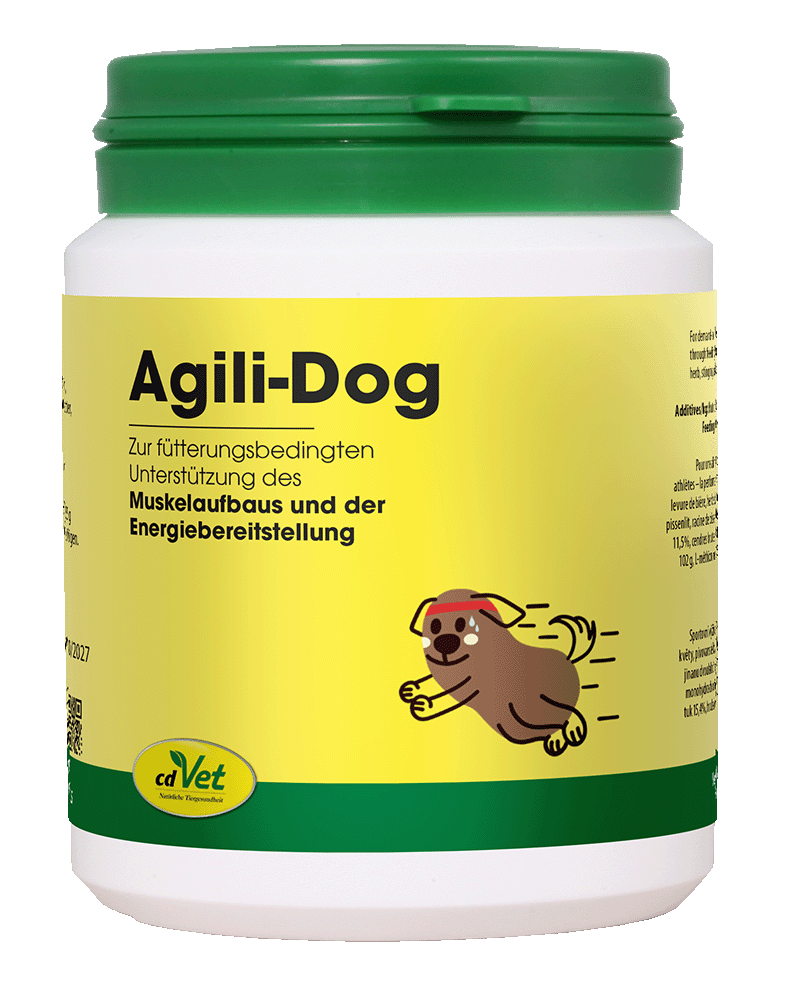
Agili-Dog 70 g
Complementary feed for dogsFor demand-oriented feeding of dogs in the build-up training and sports. Athletes nutrition - performance through feeding, structural herbsAgili-Dog is a natural complementary feed for dogs and provides the animal‘s body with valuable herbs, vitamin E, selenium, amino acids, electrolytes, essential fatty acids, and iron. For nutrition-related support in case of general weakness, listlessness, after illness or surgery, after breaks in training, lack of agility, and before, during, as well as after gestation.The food complement Agili-Dog is also recommended for performance dogs and agility friends. The contained herbs and nutrients support not only the liver and kidney, but also the muscle development and cardiovascular function. When fed regularly, Agili-Dog can also have a positive effect on performance in terms of endurance and speed. • to support the liver and kidneys • for protection against free radicals and oxidative stress • for regeneration after physical stress • for muscle building for athletic dogsExpert tip: For micronutrient and mineral supply, cdVet HuminoMineral is additionally advisable.Composition: linseeds, malt rootles, hawthorn leaves with blossoms, brewers‘ yeast, milk thistle herb, stinging nettle herb, birch leaves, rosemary leaves, ginkgo leaves, dandelion herb, dandelion rootAdditives/kg: Nutritional additives: L-lysine from L-lysine monohydrochloride (3c322) 102 g, L-methionine (3c305) 55 g.Analytical constituents: crude protein 31.2%, crude fat 15.4%, crude fiber 11.5%, crude ash 5.4%Feeding recommendation: Add 2 g/10 kg body weight to the feed daily. 1 tsp. corresponds to approx. 1.5 g.
Content: 0.07 Kilogramm (€256.43 / 1 Kilogramm)
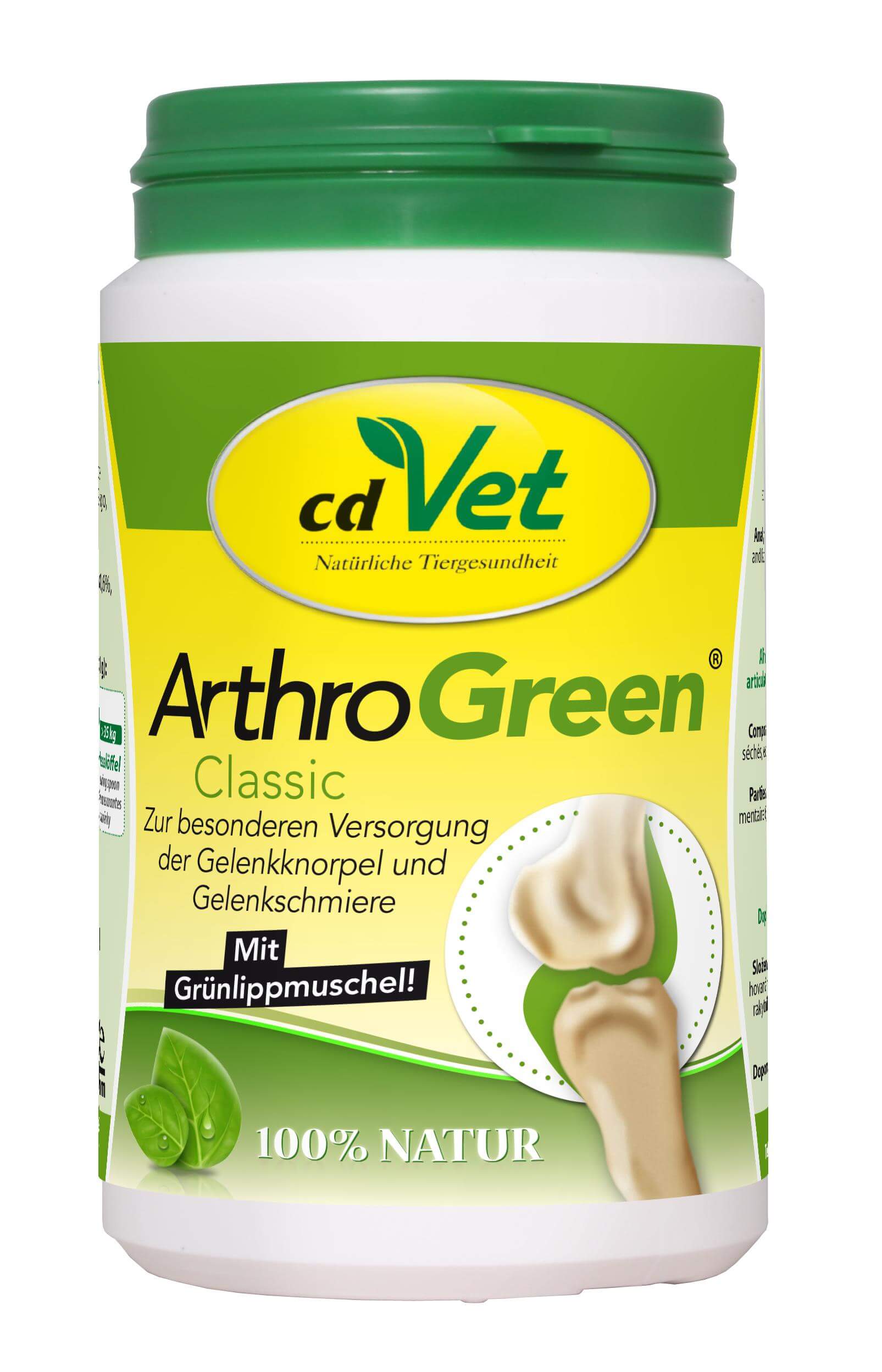
ArthroGreen Classic
Complementary feed (powder, capsules) for dogs and catsFor the demand-oriented feeding of dogs and cats sensitive to joints – special supply of joints, muscles, tendons with New Zealand greenshell mussel (non-defatted mussel meat)The New Zealand greenshell mussel has a high density of useful biologically active substances such as glycosaminoglycans. This makes it a valuable raw material with many positive properties. Glycosaminoglycans belong to the group of amino sugars (simple sugars), are also called food for the joints and are a natural component of the synovia (synovial fluid) and cartilage. ArthroGreen Classic contains a high proportion of New Zealand greenshell mussel (non-defatted mussel meat) and glycosaminoglycans, which provide an important component for the functionality of the joint and thus promote its development.Expert tip: For problem animals, the feeding amount can be doubled for approx. 2-6 weeks after the first week for special support. Blood Circulation Gel is recommended for accompanying external care. For micronutrient and mineral supply, the feeding of MicroMineral is additionally advisable.Composition: New Zealand greenshell mussel (freeze-dried) 30%, grape pips meal, ginkgo leaves, devil's claw root, stinging nettle herb, field horsetail herb, sea buckthorn berries, spirulinaAnalytical constituents: crude protein 31.6%, crude fat 6.2%, crude fiber 12.1%, crude ash 10.8%, calcium 1.46%, phosphorus 0.49%, sodium 0.41%Feeding recommendation (powder): Add 1 g/10 kg body weight daily to the feed as required. 1 half tsp. corresponds to ca. 1 g.Feeding recommendation (capsules): 4 capsules/10 kg body weight daily. Capsule filling quantity: ca. 0.3 g.
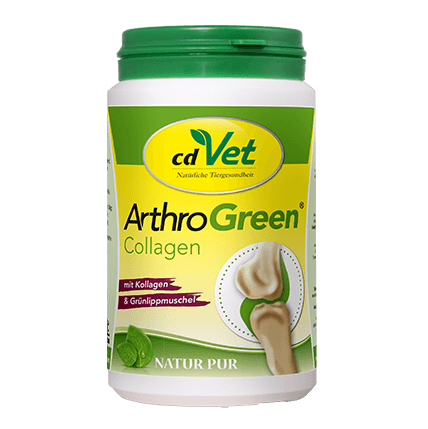
ArthroGreen Collagen 130 g
Complementary feed for dogs, cats and horsesFor nutrient supply of the joints with well utilizable collagen peptides and New Zealand greenshell mussel (non-defatted mussel meat), powderArthroGreen Collagen - so everything runs like a clockworkArthroGreen Classic was completed with well utilizable collagen peptides. This unique combination of greenshell mussel (non-defatted mussel meat), collagen, and metabolism-supporting herbs can, through the ingredients contained, strengthen the joints and increase their resistance to injury. Chondroitin sulfate, glucosamine glucans, collagen, and silicic acid can stimulate the self-regulation and regeneration of cartilage-forming cells.non-defatted mussel meat of the New Zealand greenshell musselimproved joint functionsincreased joy of movementmore quality of lifeComposition: porcine collagen hydrolysate 66.9%, New Zealand greenshell mussel (freeze-dried) 10%, grape pips meal, ginkgo leaves, devil‘s claw root, stinging nettle herb, field horsetail herb, sea buckthorn berries, spirulinaAnalytical constituents: crude protein 70.0%, crude fat 2.0%, crude fiber 3.95%, crude ash 4.45%, calcium 0.55%, phosphorus 0.15%, sodium 0.23%How to use: Add daily to the feed. Cats, dogs: 1 g/10 kg body weight. Horses: 5-10 g/kg body weight.1 half tsp. corresponds to approx. 1 g. 1 tbsp. corresponds to approx. 6.3 g.In case of particular strain, the feeding amount can be increased by half.
Content: 0.13 Kilogramm (€153.46 / 1 Kilogramm)
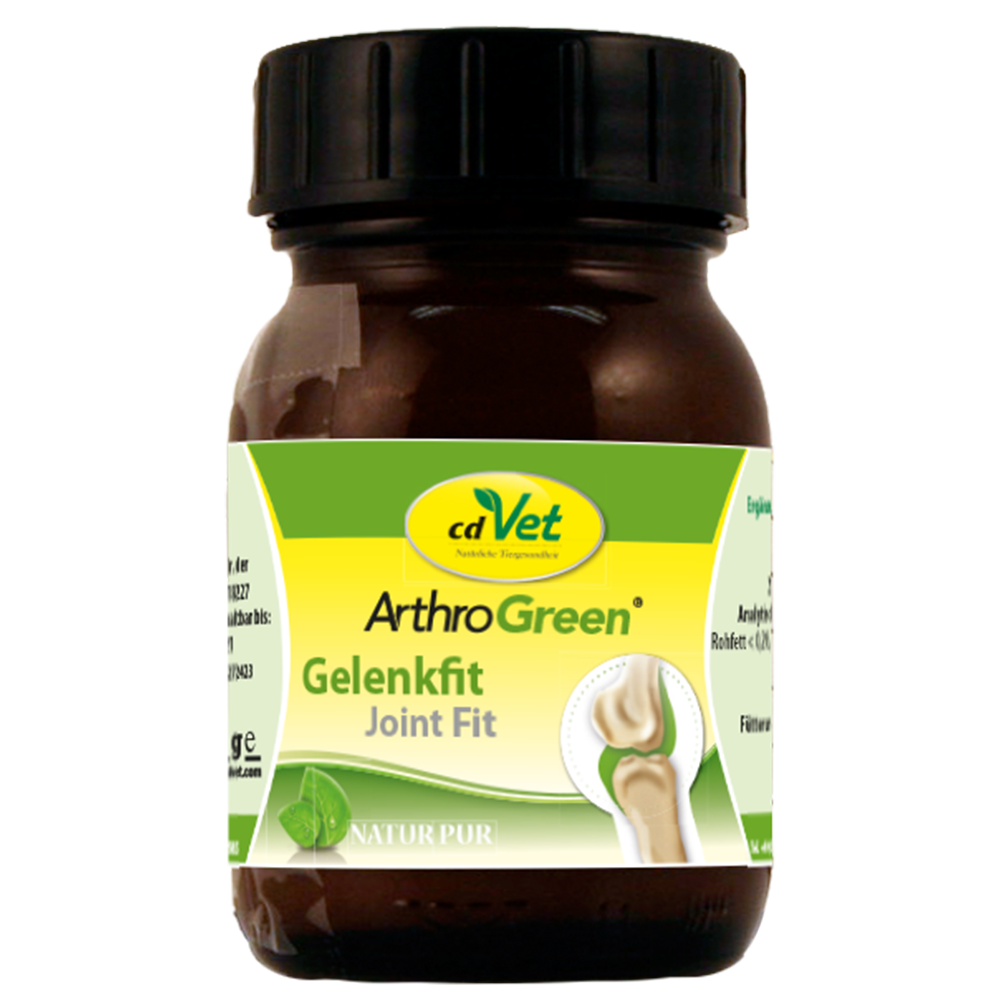
ArthroGreen Joint Fit 70 g
Complementary feed (powder) for dogs, cats and horsesComposition: dextrose, field horsetail herb, stinging nettle herb.Additives/kg: Technological additives: diatomaceous earth (E551c) 2.5 g.Analytical constituents: crude protein 0.3%, crude fat 0.2%, crude fiber 0.5%, crude ash 0.12%, sodium 0,02%.Feeding recommendations: Add to the feed 1 x daily for 2 months. Dogs, cats: 0.5-1 g. Horses: 1-2 g. 1 quarter tsp. corresponds to approx. 0.8 g.
Content: 0.07 Kilogramm (€699.29 / 1 Kilogramm)
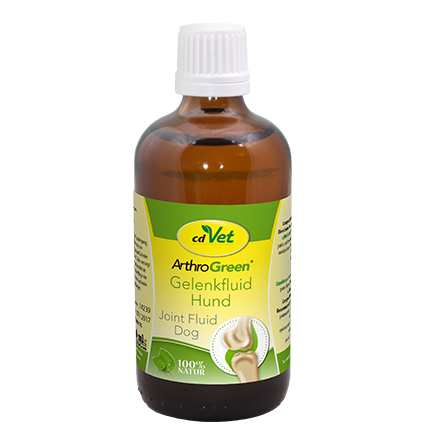
ArthroGreen Jointfluid 100 ml
Care product for dogs and horsesNatural herbal extract for the care of the skin in the joint area after particular strainsIt is particularly important to support the skin‘s metabolism and optimally prepare the tendons and joints for the forthcoming exertions before and after particular exertions, such as walks, races, competitions, trail and endurance rides, etc.Expert tip: ArthroGreen herbal is recommended as nutrition-related support. This combination has proven to be particularly effective for swollen legs.Composition: Alcohol-based herbal combination with extracts from: birch leaves, horse chestnut blossoms, mountain arnica blossomsHow to use: Apply to joints and tendons in the leg area with a gauze compress or cotton cloth 15-30 minutes before and after strain (walk, training, work). Do not bandage afterwards! This supplies the metabolism of the skin, tendons, and joints.Store it cool and dark!WARNING • Flammable liquid and vapour. Keep out of reach of children. Keep away from heat, hot surfaces, sparks, open flames and other ignition sources. No smoking. Keep container tightly closed. Dispose of contents/container to hazardous waste collection point.
Content: 0.1 Liter (€219.50 / 1 Liter)
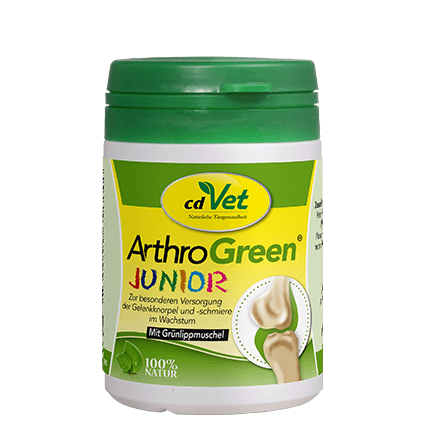
ArthroGreen Junior 25 g
Complementary feed for dogs and catsFor demand-oriented feeding of young growing animals with green-lipped mussel - nutrients for joints, muscles, tendons, powderArthroGreen Junior is particularly suitable for growing animals to provide nutrition-related important building blocks for the joint structures and the musculoskeletal system during this elementary period of growth.ArthroGreen Junior is characterized by its high vitamin C content. Vitamin C is an important factor for the release of the growth hormone in the body and must not be in short supply especially in the phase of maturation. Furthermore, vitamin C is of great importance for collagen biosynthesis and thus for the strength of bones and cartilage.The glycosaminoglycans provided by the green-lipped mussel are a natural component of the synovia (synovial fluid) and thus provide important building blocks for naturally balanced growth. With the other ingredients, the whole is supplemented with almost 70% digestible protein, a high variety of vitamins, trace elements, minerals and amino acids that can create good conditions for young animals in growth.Expert tip: For micronutrient and mineral supply, the feeding of MicroMineral is additionally advisable.Composition: New Zealand greenshell mussel powder (freeze-dried) 30%, grape pips meal, parsley, ginkgo leaves, rose hip husks, field horsetail herb, spirulina, sea buckthorn berriesAdditives per kg: Technological additives: bentonite (1m558i) 10 g, clinoptilolite of sedimentary origin (1g568) 10 gThe total amount of bentonite must not exceed the permitted maximum level in complete feedingstuff of 20000 mg/kg of complete feedingstuff. Total quantity of clinoptilolite of sedimentary origin from all sources shall not exceed the maximum content of 10000 mg/kg.Analytical constituents: crude protein 27.5%, crude fat 6.3 %, crude fiber 13.5%, crude ash 10.8%, phosphorous 0.43%, calcium 1.13%, sodium 0.48%, ash insoluble in HCl 4.0%How to use (powder): 1 g/10 kg bodyweight per day. 1 half tsp. corresponds to approx. ca. 1 g.How to use (capsules): Cats: 1 capsule. Dogs up to 10 kg: 1-3 capsules. Dogs over 10 kg: 3-5 capsules. Capsule filling quantity: approx. 0.36 g.The simultaneous oral use with macrolides shall be avoided.
Content: 0.025 Kilogramm (€398.00 / 1 Kilogramm)
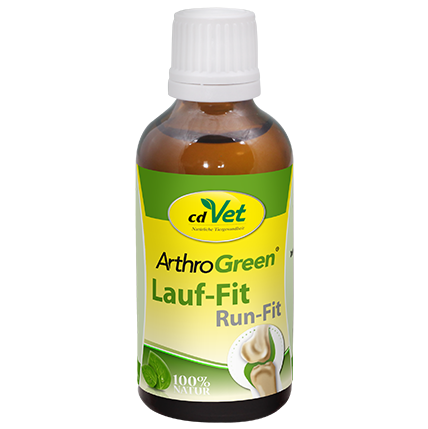
ArthroGreen Run-Fit 50 ml
Complementary feed (liquid) for dogs, cats, and horsesFor nutrition-related and therapy-accompanying support of the entire musculoskeletal system, especially in heavy use of the jointsArthroGreen Run-Fit is ideal for supporting the damaged joint apparatus in animals with osteoarthritis (also bone spavin and podotrochlosis in horses). This product contains highly active micronutrients and natural building blocks that help to maintain the musculoskeletal system.The ideal mixture of purely natural herbs in ArthroGreen Run-Fit makes a significant contribution to promoting the health of the musculoskeletal system and joints as well as reducing feeding-related deficiencies. This balanced blend of herbs with special bitter substances and flavonoids supports the health of the musculoskeletal system and joints. The natural salicin contained in ArthroGreen Run-Fit, which is metabolized in the body to salicylic acid, contributes in combination with circulation-promoting ingredients to support stressed joints. The careful composition promotes joint metabolism and counteracts the harmful effects of free radicals, which can affect cell structures. This support is particularly beneficial for age-related complaints such as osteoarthritis or intensive sporting activity.Composition: willow bark, devil‘s claw root, ginkgo leaves, arnica blossoms, horse chestnut blossoms, marigold blossomsAdditives/kg: Flavouring compounds: ethanol (2b02078) 62 g.Analytical constituents: crude protein 0.3%, crude fiber 0.5%, crude ash 0.4%, crude fat 0.2%, moisture 93%, sodium 0.02%How to use: Shake before use. Add to the feed as required or give directly into the muzzle. Cats: 0.5-1 ml/animal daily. Dogs: 2-4 ml/animal for at least 6 weeks 2 x daily. For year-round requirements: 1 ml/animal daily. Horses: 10 ml/animal for at least 4 weeks 2 x daily. For year-round requirements: 10 ml/animal 2 x daily. 10 drops correspond to approx. 0.3 ml. 1 tsp. corresponds to approx. 5 ml.
Content: 0.05 Liter (€239.00 / 1 Liter)
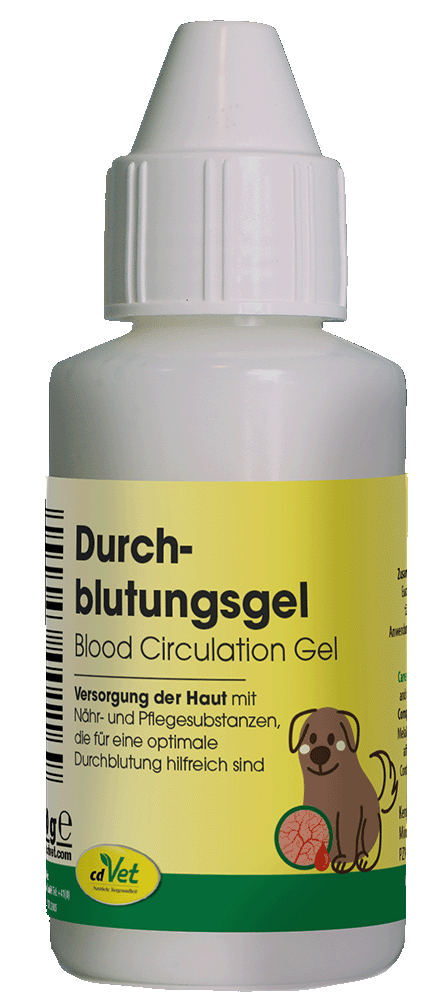
Blood Circulation Gel 100 g
Care product for dogsBlood Circulation Gel supplies the skin with nutrient- and care substances that are helpful for optimal blood circulation.Blood circulation is a substantial factor in the process of all bodily functions. Because only where blood comes to, the body can initiate healing processes itself. Blood Circulation Gel provides the skin with nutrient- and care-substances, and intensively promotes blood circulation without making the skin brittle. It is particularly nursing, refreshing and beneficial. Blood Circulation Gel quickly penetrates the skin and thereby does not leave any annoying residues on the fur.Blood circulation is important:at bruisesfor the respiratory tractsfor the condition of the mammary glandsat sore musclesat tension of muscelsat overstraining of jointsat hematomasfor stimulating the metabolismComposition: with ethereal oils (Mentha piperita, Calendula, Eucalyptus, Melaleuca alternifolia)Application recommendation: Rub a thin and smooth layer into the affected skin areas twice daily. Apply at least for 3-8 days.Contains peppermint oil and eucalyptus oil. May produce an allergic reaction.
Content: 0.1 Kilogramm (€139.50 / 1 Kilogramm)
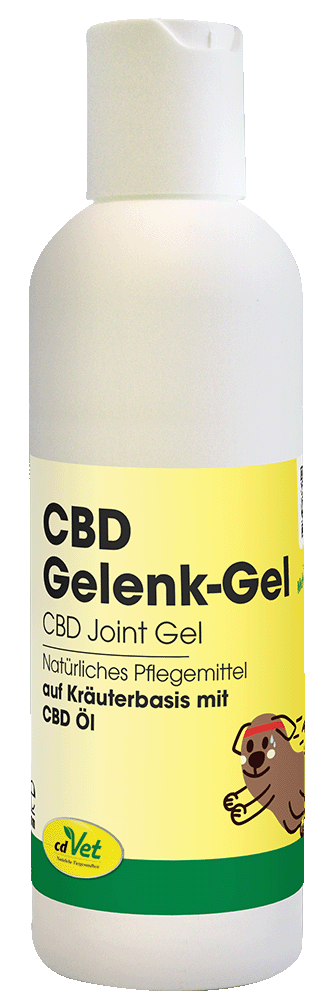
CBD Joint Gel 100 ml
Care product for animalsNatural care product based on herbs with CBD oil for supportive care in the joint area, cooling and soothingWhether it is the rampaging and playing young dog that falls over its own paws every now and then, or the young foal that cuts a caper in the paddock, or the elderly senior who can‘t quite get out of his basket or box in the morning. The joints have to do a lot, and every now and then they also have a bad day, and need a little bit of our support. Then how about a supportive, soothing care from the outside. CBD Joint Gel is easy to apply, and a boon for tendons, ligaments, and joints.Dogs with MDR1 gene defect: There are no reliable studies on the tolerability of CBD products regarding dogs with MDR1 gene defect. We therefore recommend ArthroGreen Joint Gel as an alternative.Composition: aqua, natural emulsifier, CBD oil, peppermint oil, xanthan gum, eucalyptus oil, marigold oil, jojoba oil, St. John‘s wort oil, green tea extract, rosemary oil, gum arabic, arnica blossom extractApplication recommendation: rub thinly and evenly into the affected areas of the skin 2 x daily. Application duration: at least 3-8 days.Not suitable for cats !Contains eucalyptus oil, L-menthan-3-one, and cineole. May produce an allergic reaction.
Content: 0.1 Liter (€149.50 / 1 Liter)
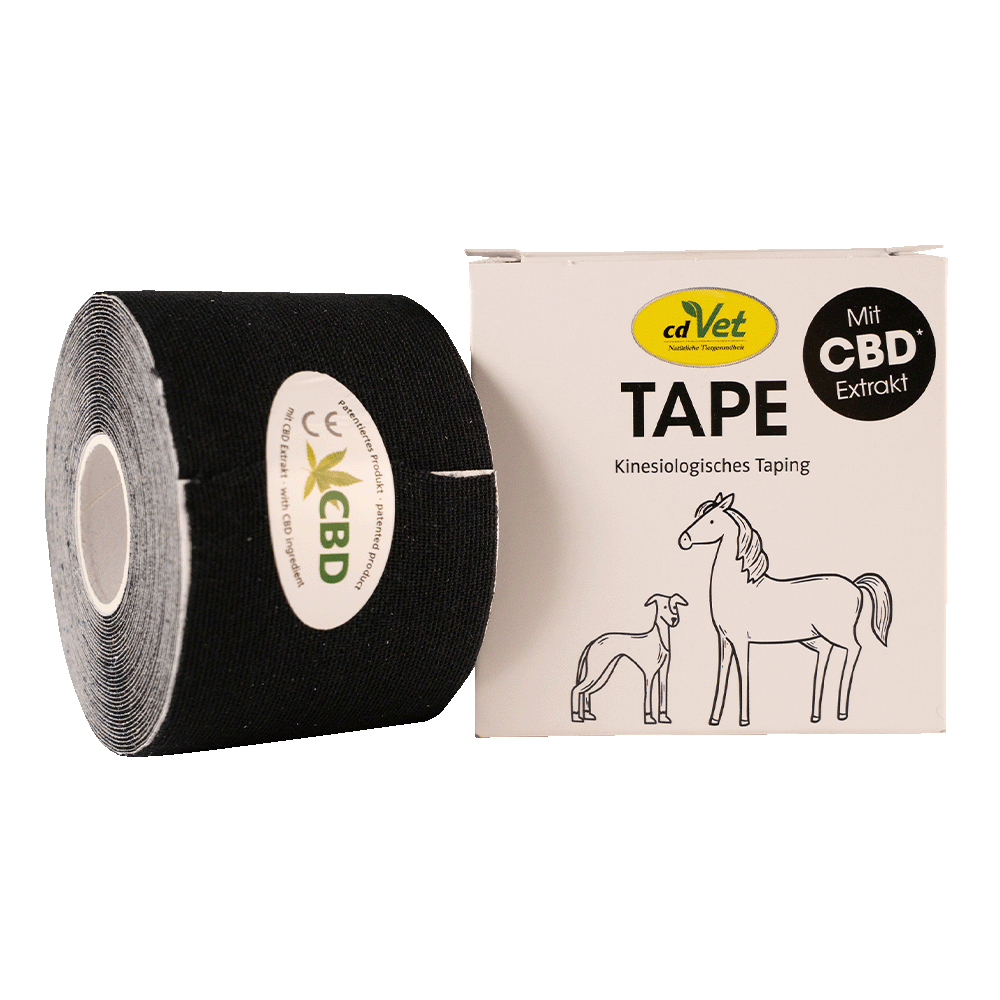
cdVet Tape CBD
Tape bandage for animalsElastic, self-adhesive tape bandage for supportive therapy for strains, sprains, bruises, etc.The kinesiology tapes from cdVet have been specially developed for use on animals. They consist of an elastic cotton fabric with a skin-friendly adhesive based on rubber and enriched with high-quality plant extracts such as cannabidiol (CBD). This combination unites the physical benefits of kinesiology taping with the beneficial properties of natural plant extracts - optimally supporting the body's self-healing powers.Composition: Backing material: 95% cotton, 5% elastane. Adhesive: rubber-based with CBD solution. No THC. Application recommendation: Before use, the coat should be cleaned and free of grease. Remove the protective film. Apply the tape without stretching. Adhesive develops its adhesive effect through friction. The tape stays on the coat for approx. 1-2 days. Tape size: 5 cm x 5 m, 1 roll / package. Store it cool, dry and protected from direct sunlight between 5-25°C.Safety instructions:If there is an allergy to one of the ingredients, do not use the tape or test it on a small area of skin firstDo not apply to open wounds and skin injuriesDo not use for acute and chronic skin diseases (e.g. neurodermatitis in flare-ups, fungal infections)Only apply the tape to gestating bitches after consultation with the attending veterinarianKeep out of the reach of children
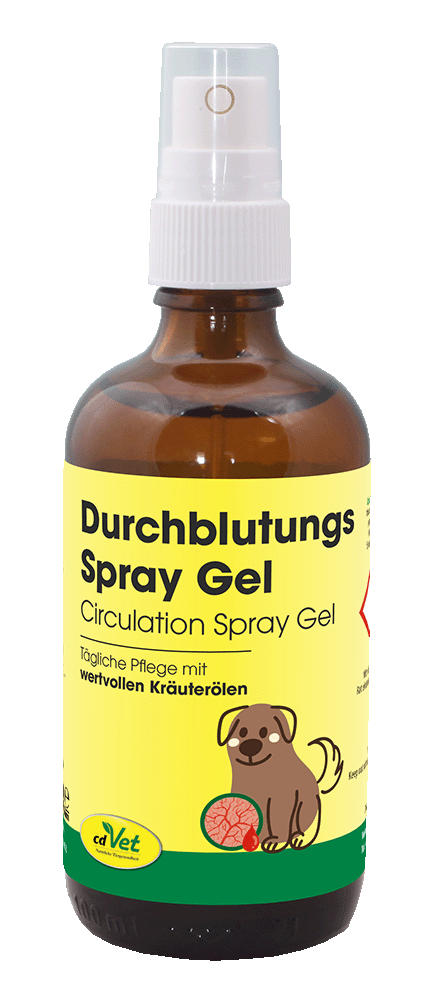
Circulation Spray Gel 100 ml
Care product for animalsDaily care with valuable herbal oilsCirculation Spray Gel provides the skin with nutrient- and care substances that are helpful for optimal blood circulation.Circulation Spray Gel, the innovative advancement of cdVet, for the care. The spray technology makes it easy and quick to use. Circulation Spray Gel immediately penetrates the skin without leaving greasy residues in the process. It provides the skin with nutrient- and care substances and intensively promotes blood circulation without making the skin brittle. The oils used keep the skin supple naturally. Circulation Spray Gel is particularly nourishing, refreshing and beneficial. Moreover, peppermint and eucalyptus oils also have a cooling effect on the skin. Blood circulation is an essential factor in the process of all bodily functions. Because only where blood comes to, the body can initiate healing processes itself.Blood circulation is important:at bruisesfor the respiratory tractfor the condition of the mammary glandsat sore musclesat tension of musclesat overstraining of jointsat hematomasfor stimulating the metabolismComposition: aqua, natural emulsifying agent, peppermint oil, eucalyptus oil, calendula oil, jojoba oil, tea tree oil, rosemary oil, St. John‘s wort oil, green tea extract, xanthan gumApplication recommendation: Spray the affected skin area twice a day thinly and evenly. Duration of application: at least 3-8 days.Shake before use.The product should not be applied to cats, since it contains tea tree oil.Contains limonene and alpha-pinene. May produce an allergic reaction. Do not spray in the eyes. Keep safe for children.
Content: 0.1 Liter (€179.50 / 1 Liter)
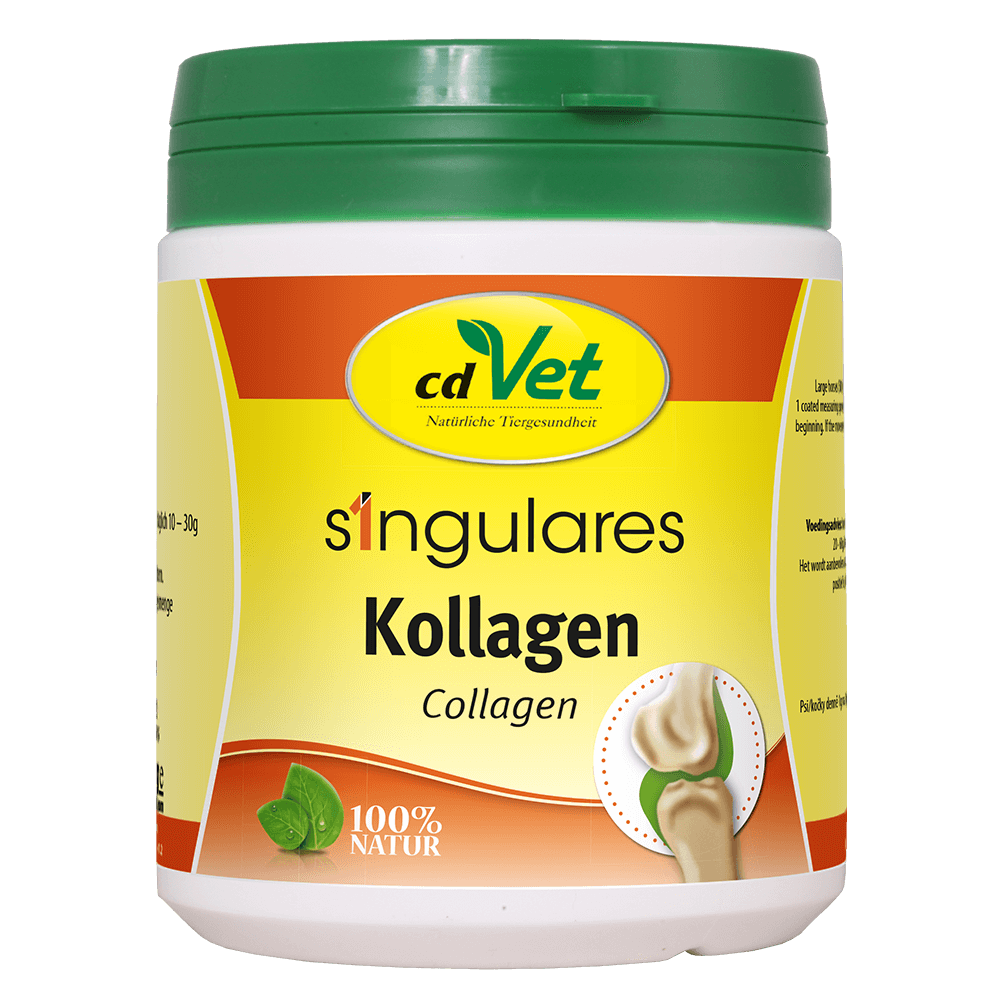
Singulares Collagen 250 g
Feed materialCollagen can strengthen joints and increase their resistance to injury via its contained protein components. By providing these cartilage-building substances, cartilage density can be increased through self-regulation and regeneration of the organism.These ingredients can help to improve skin health. Skin own structures combine with collagen. Skin elasticity and moisture retention can be increased. Cracks and dry skin areas can be stimulated to regenerate.can strengthen the joints via the contained protein componentscartilage density can be increased by self-regulation and regeneration of the organismskin elasticity and moisture retention can also be increasedComposition: porcine collagen hydrolysate 100%.Analytical constituents: crude protein 90%.Feeding recommendation: Add daily to the feed. Dogs/cats: 1 g/5kg body weight. Horses: 10 g/100 kg body weight. 1 tsp. corresponds to ca. 1.8 g / 1 tbsp. = ca. 5.5 g.It is recommended to feed the highest daily amount at the beginning. As the animal‘s ability of movement improves, the daily amount can be gradually reduced.
Content: 0.25 Kilogramm (€83.80 / 1 Kilogramm)
A mineral deficiency in dogs affects various areas of the body. For example, there may be a drop in general energy, an accumulation of infections due to a weakened immune system or a poorer coat condition.
Supplementary feed can be useful in cases of deficiency symptoms, increased stress, great physical exertion, raw feeding or after an operation, for example. Which products are suitable for your dog depends very much on the individual.
Both food options have advantages and disadvantages. The choice depends on various factors, including the individual needs and preferences of the dog. However, when feeding dry food, care should be taken to ensure that the dog is sufficiently hydrated. If the dog generally drinks little, water can be added to the dry food to ensure adequate intake.
A complete feed is a complete and balanced feed that contains all the nutrients needed for a healthy diet. Supplementary feed is used in addition to regular feeding to supplement certain nutrients or functions.
A healthy dog's nutritional needs are largely covered by a complete, high-quality complete feed. However, vitamins and minerals in conventional feed are usually contained in synthetic form, which puts a strain on the metabolism. In some cases, such as illness, pregnancy or old age, the nutritional needs are changed or increased. In these cases, nutritional supplements can be a useful addition to daily feeding. When BARFing, supplementary feed can be added specifically to make the food more complete.
In ataxia, the coordination of movement sequences is disturbed. This is noticeable through insecurity when walking and standing up, sometimes also changes in behavior or personality.
The joints are nourished by alternating loading and unloading. Immobility is therefore bad for the joint cartilage and all surrounding structures. The extent of movement should always be adapted to the dog's constitution and activity level. In terms of nutrition, the joint can be supported by green-lipped mussel powder, for example.
In a herniated disc, one or more discs in the dog's spine are damaged or displaced. This can lead to pain, restricted movement and neurological symptoms. The symptoms can vary depending on the severity and location of the injury.
The painless cracking is often caused by a shortening of muscles and tendons. When moving, air bubbles in the synovial fluid can also create these noises. If your dog shows pain signals, the musculoskeletal system should be examined.
A trapped nerve can be very painful. Typical signs include a reluctance to move, growling when touched and licking the painful area. Lameness in the affected limbs also changes the dog's gait.