








The start of horse life
A horse mare is pregnant for between 315 and 340 days. After birth, the foal is already a few minutes later, able to get up. This is important so that the lungs can unfold and the foal can take the first breast milk for strengthening. cdVet offers other foal and breeding products to support natural foal health.
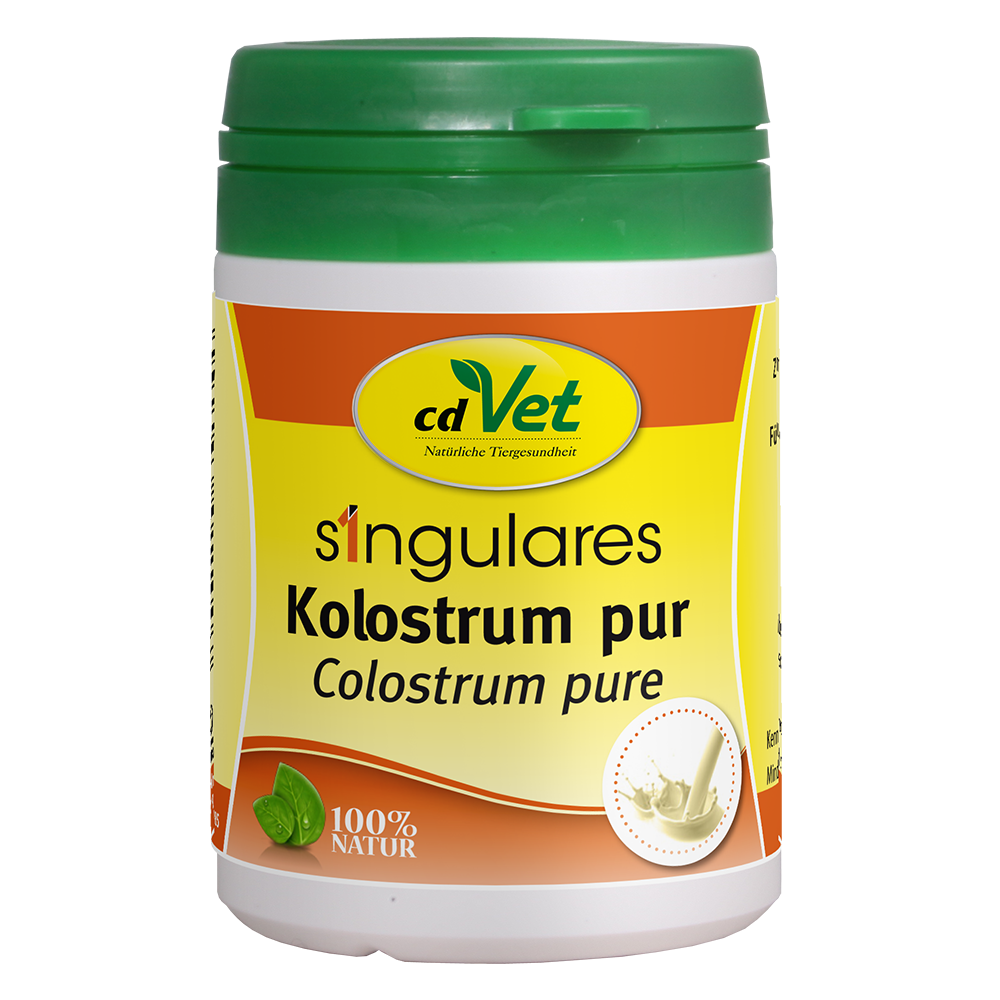
Singulares Colostrum pure 30 g
Colostrum, also called foremilk or beestings mild, is one of the oldest and most extraordinary foods found in nature. Colostrum is unique - in addition to vitamins, minerals, trace elements, essential and non-essential amino acids, colostrum provides natural immune and growth factors in a unique variety and concentration not found in any other plant or chemical product!Singulares Colostrum pure is particularly gently dried. We have deliberately chosen bovine colostrum because cows have relatively high surplus quantities during the first milkings (in contrast to sheep and goats), so that sufficient colostrum is also available for the calf.Singulares Colostrum pure has proven itself:for the natural strengthening of the entire immune systemconcentrated nutrient cocktail to strengthen malnourished, weak animalsto strengthen mother animals, before and after birthas a complement to maternal milkto strengthen the vital functions of older and young animals
Content: 0.03 Kilogramm (€565.00 / 1 Kilogramm)
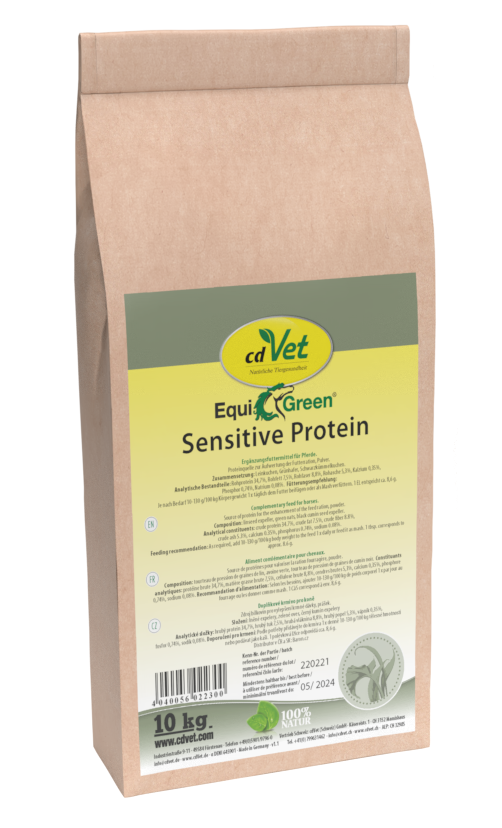
EquiGreen Sensitive Protein 10 kg
Not all hay is the same In some years, hay quality often presents horse owners with a major challenge, and they do not always have the opportunity to change anything themselves. Especially in 2022, the hay quality in the analyses shows low values in the area of digestible crude protein and, in comparison, very high sugar values. Proteins are the building materials of the body. They are needed for daily renewal processes, muscle development and maintenance, and cell regeneration. Thus, a low-protein hay is a special challenge for all horses in active training, in the use of mating, in growth, for horses with an increased protein requirement due to muscle diseases, and for seniors. The high sugar levels, in turn, pose an increased risk for all metabolically sensitive horses. EquiGreen Sensitive Protein can have a positive influence on the insulin sensitivity of the cells and the blood sugar level. Valuable protein sources in the form of gently processed oil press expeller supply your horses with essential amino acids and provide important energy for the supply of muscles and body. In winter, EquiGreen Sensitive Protein can help to maintain the muscles and provide sufficient building materials for the constant renewal processes.
Content: 10 Kilogramm (€5.00 / 1 Kilogramm)
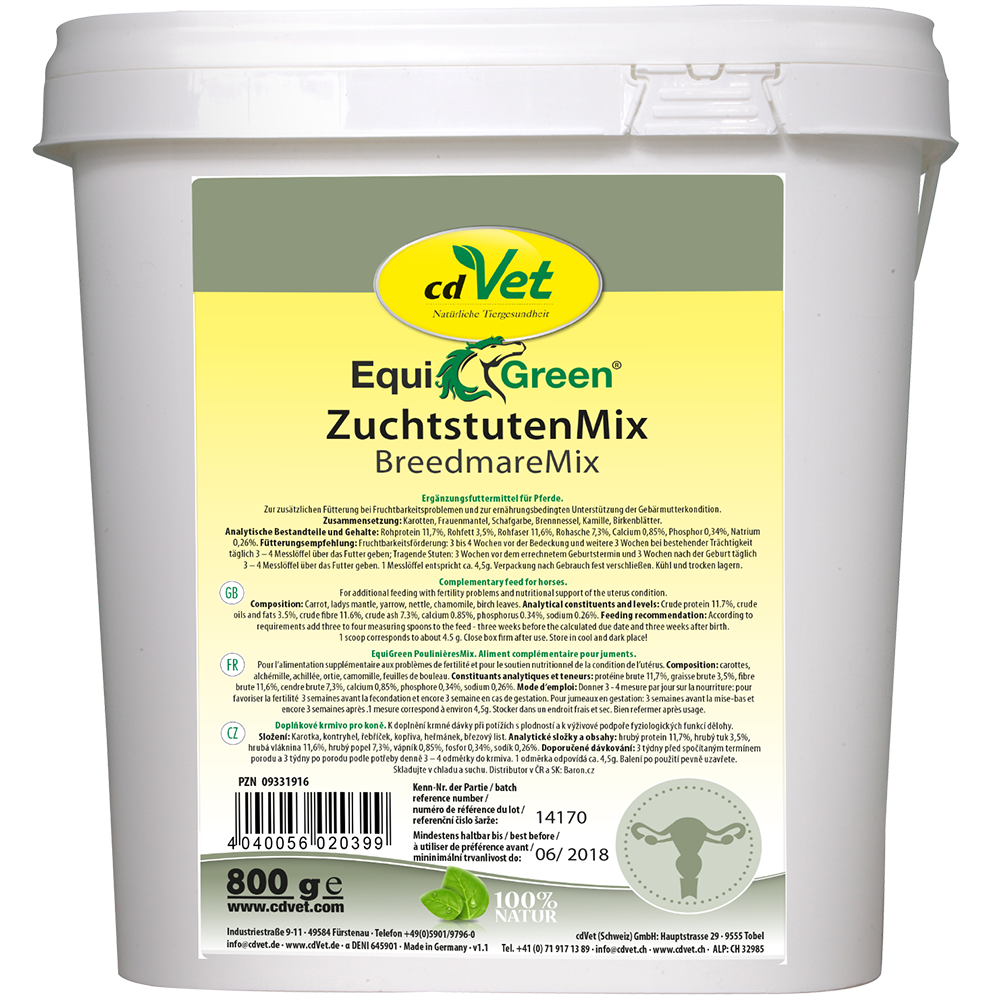
EquiGreen BroodmaresMix 800 g
EquiGreen BroodmaresMix has been developed to nutritionally support the mare's fertility. This special blend can promote blood circulation in the uterus, strengthen its muscles and thus facilitate the birth process and subsequent regeneration of the mare. EquiGreen BroodmareMix compensates for nutritional imbalances in the last weeks of gestation and in the first lactation phase and activates the metabolism. Herbs & Fertility The minerals, trace elements and vitamins contained in herbs can compensate for the lack of herbs in today's meadows and thus provide a wide range of support during birthing: Fertility-supporting herbs stimulate and regulate the hormone balance and thus also ovulation (or the production of the corpus luteum for implantation of the egg). Phytohormones strengthen the uterine tissue and can support the birth and foaling process. The physiological detachment of the placenta is naturally supported. Vitamins & Fertility The feeding of a not in foal mare should be adapted to her actual energy and micronutrient requirements: Special features, such as a lactating mare, must be taken into account. Nutrient deficiencies should be compensated for before the mating, in order to promote the probability of a good intake and healthy foal development. Vitamin A, is the `fertility vitamin´ - a deficiency can lead to loss of fertility or malformations, even death of the embryo. An additional supply of ß-carotene before conception and during gestation is therefore recommended.
Content: 0.8 Kilogramm (€47.44 / 1 Kilogramm)