







Strong teeth for strong animals
Dental care and general oral hygiene nourishes and protects the teeth and gums of cats. If done regularly and thoroughly, it can also prevent plaque and tartar. In the short term, it also helps against unpleasant breath. Following your cat's oral hygiene contributes to their well-being and overall health.
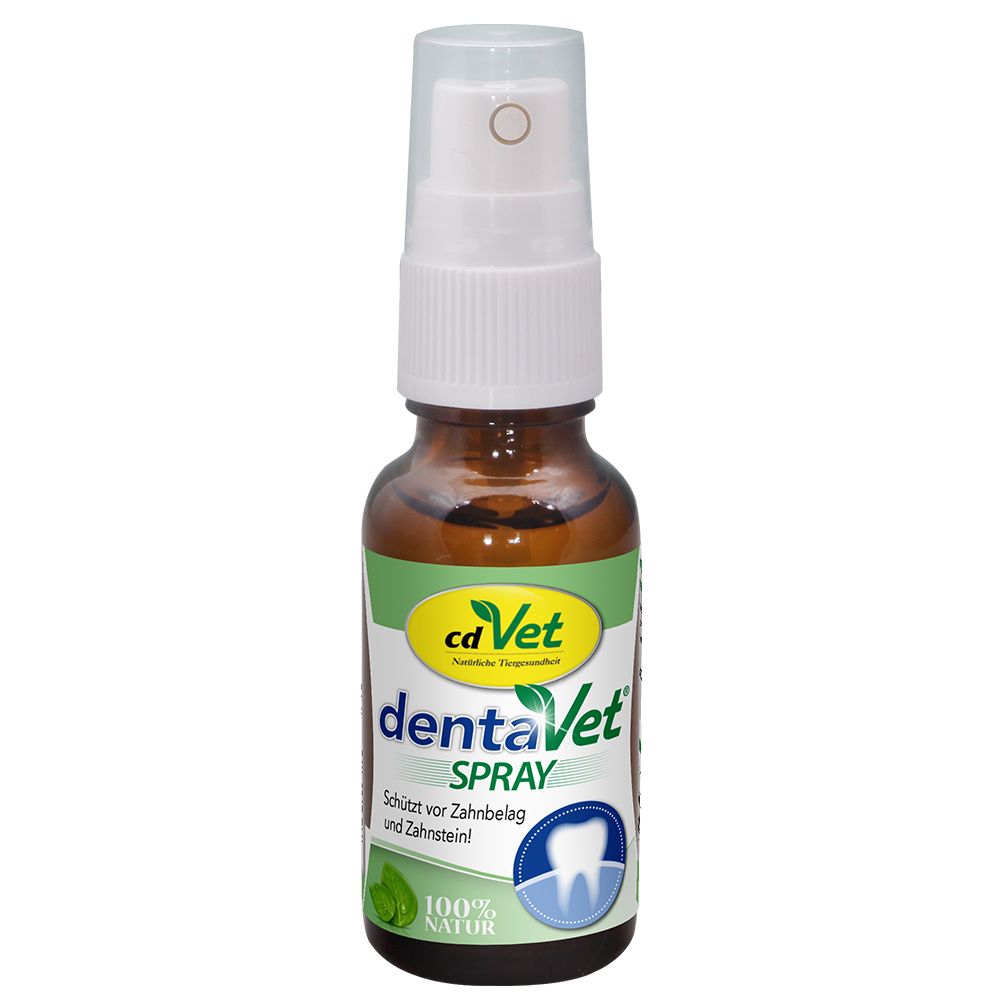
dentaVet Spray 20ml
Bacteria and fungi often form a mouth flora, which negatively affect the health. Inflammation of the gums, mouth rot, tartar, tooth loss are also often the direct consequences - loss of appetite, pain in the mouth area, unpleasant mouth odor, but also further in the body scattering of infection are unfortunately not uncommon. Therefore, optimal care and mouth hygiene is especially in sensitive animals is an important contribution to the health and well-being.DentaVet spray contains the valuable oils of calendula, Boswellia and pine.- cares the teeth and gums- Odor and gum tonic- Provides an effective supplement to the tooth and mouth hygiene
Content: 0.02 Liter (€647.50 / 1 Liter)
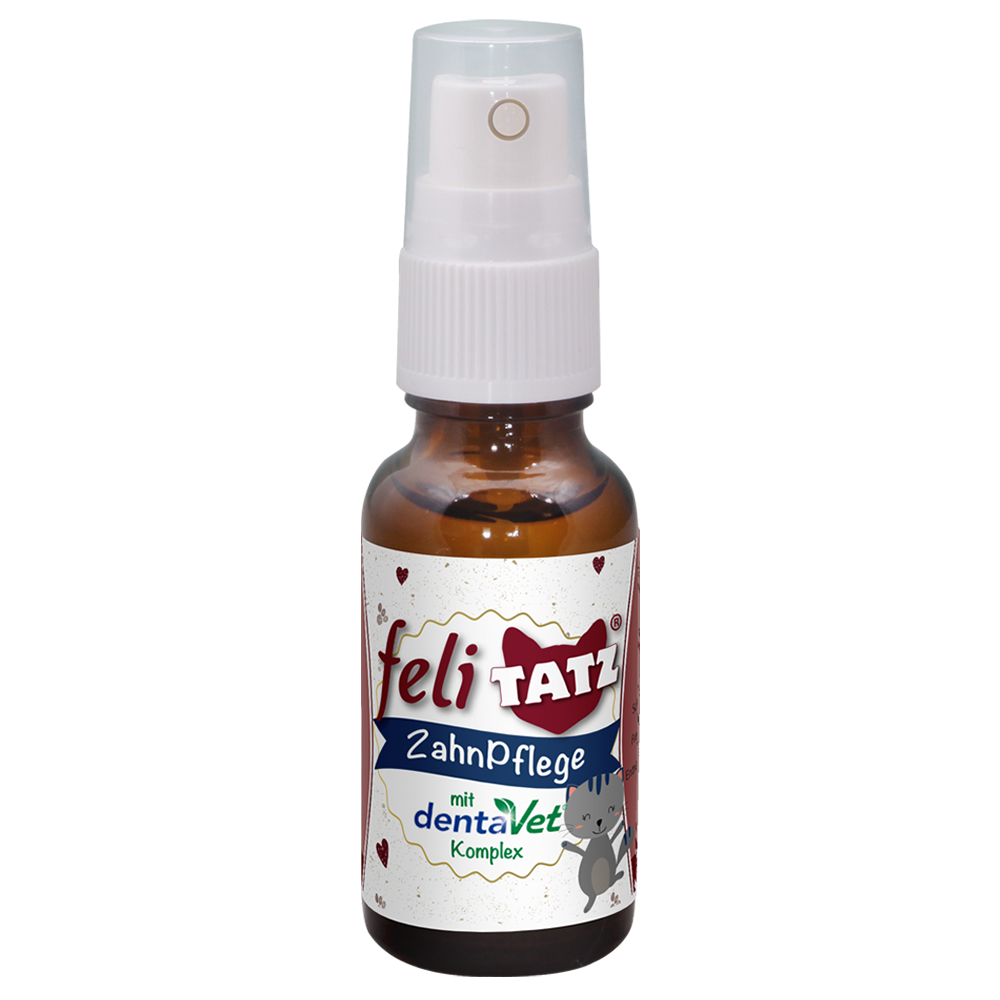
feliTATZ dental care 20ml
Bacteria and fungi form often a mouth flora, which adversely affect the health. Inflammation of the gums, mouth rot, dental calculus formation, tooth loss are also often the direct consequences - loss of appetite, pain in the jaw area, unpleasant mouth odor, but also further in the body scattering of infection are unfortunately not uncommon.Therefore, an optimal care and mouth hygiene is especially in sensitive animals is an important contribution to the health and well-being.feli TATZ dental care contains valuable oils from Boswellia, sage, star anise, fennel, thyme and clove.- cares the teeth and gums- Odor and gum tonic- Provides an effective supplement to the tooth and mouth hygiene- More adherent by the oily consistency- Suitable without spraying sound, therefore suitable for sensitive animals
Content: 0.02 Liter (€597.50 / 1 Liter)