It's easy to breathe
Horses have a powerful respiratory system, which is divided into the upper and lower respiratory tract. Nevertheless, irritation or the like can occur in the respiratory tract, which can cause a cough. For additional support, you will find selected cdVet products for your horse here.

EquiGreen Hay Protect 500 ml
Complementary feed (liquid) for horsesSpray for a fungus-hostile hayMold and spores can significantly burden the sensitive respiratory tract of horses and, in the case of sensitive animals, the entire organism. Yet we are surrounded by a natural content of spores in the air every day. Only when these spores encounter a suitable breeding ground can an overpopulation of mold develop, which can be harmful to health. Improperly dried or stored hay can be such a breeding ground. The mold is not always visible to the naked eye. The already dangerous threads permeate the hay even before the fungus is recognizable as such.EquiGreen Hay Protect starts exactly here and is very easy and uncomplicated to use. The essential oils evaporate into the hay and can thus massively contain the proliferation of mold. At the same time, the structure of the hay is preserved - and thus also its acceptance. In addition, the respiratory tract is supported by the scent of the essential oils.Composition: linseed oil, sodium chlorideAdditives/kg: Sensory additives: oregano oil 29 g.Analytical constituents: crude protein 2.5%, crude fat 4%, crude fiber 0.5%, crude ash 1.1%, moisture 93%, sodium 0.4%Application recommendation: Initially add 5 ml/L to the pressure sprayer and spray the hay with it. Thereafter, the application rate can be reduced to 3-4 ml/L.Store it cool and dark!
Content: 0.5 Liter (€53.00 / 1 Liter)
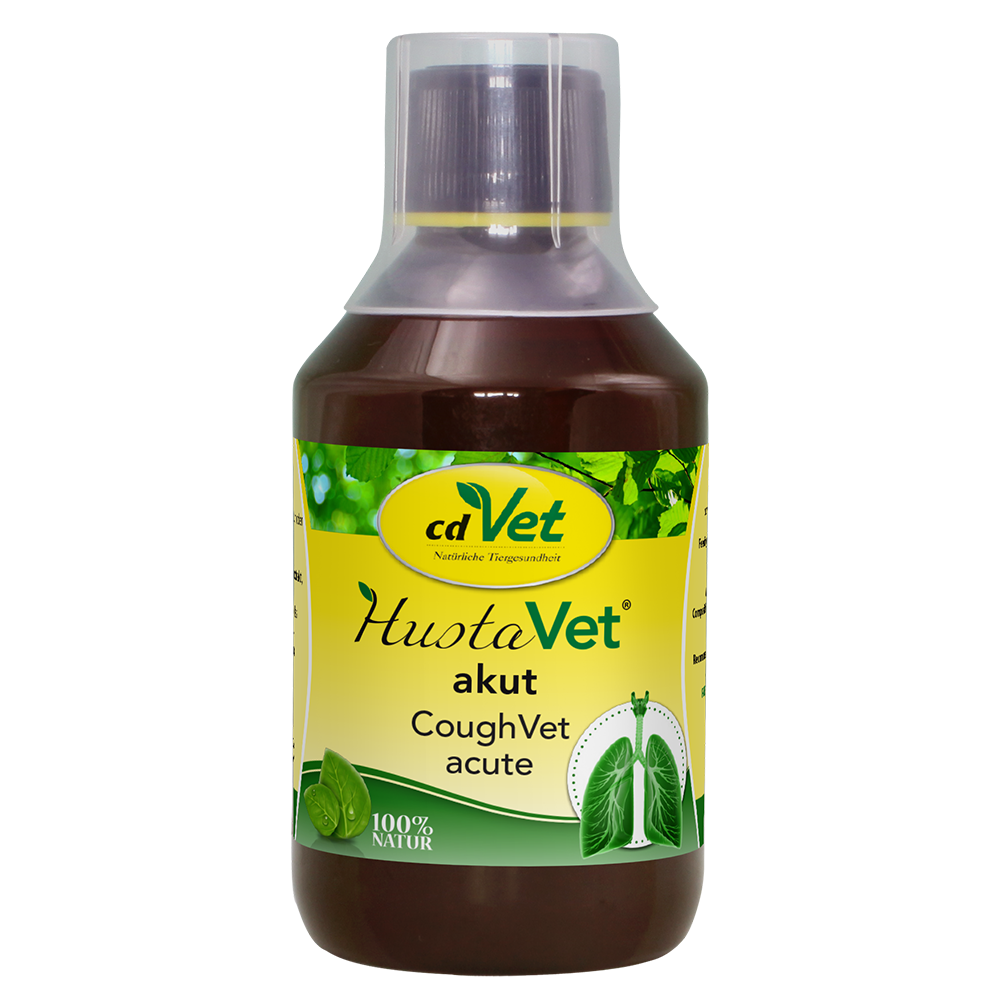
HustaVet acute 250 ml
Complementary feed (liquid) for horsesFor supporting the self-cleaning function of the bronchial tubes in horses with respiratory sensitivitiesThe horse‘s entire body is designed for movement and speed. The respiratory organs are also correspondingly efficient. Unfortunately, this naturally results in a high sensitivity to cold and dusty air.HustaVet acute contains essential oils, which can improve the self-cleaning mechanism of the bronchial tubes, and natural mucilage, which has a protective and soothing effect on the sensitive mucous membranes of the respiratory tract. It also contains excellent sources of vitamin C and a variety of secondary plant substances that the immune system needs to maintain its function. This selected combination of high-quality herbs makes HustaVet acute a beneficial feed supplement for horses with sensitive respiratory tracts.Composition: fruit vinegar, elderberry juice, sea buckthorn juice, anise seeds, marshmallow roots, fennel seeds, thyme, licorice root, sage leaves, linden tree blossoms, cowslip blossom, lungwort, willow bark, purple coneflower herb.Additives/kg: Flavouring compounds: ethanol 75.53 g.Analytical constituents: crude protein 1.0%, crude fiber 1.5%, crude fat 0.8%, crude ash 2.0%, moisture 93%, sodium 0.3%.Feeding recommendation: If required, mix 10 ml into the feed 2 x daily for 10 days. Requirement for year-round feeding: e.g. 2 x 2.5 ml daily.
Content: 0.25 Liter (€127.80 / 1 Liter)
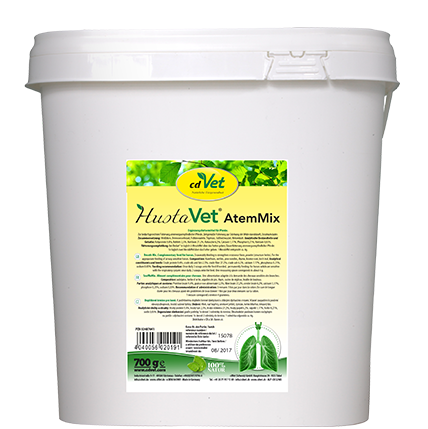
HustaVet BreathMix 700 g
Complementary feed for horsesFor demand-based feeding of horses sensitive to respiratory tract - intermittent feeding to strengthen the immune defenses, structural herbsHustaVet BreathMix is a complementary feed for horses and contains the bronchial herbs missing in the usual diet. These fine nutritional substances have proven themselves for years for feeding as needed for horses sensitive to respiratory tract. Due to the vitamins and flavonoids contained from purely natural sources. the bronchial function and the self-healing powers of the body are supported, and the well-being of the horse is improved.Composition: hawthorn, stinging nettle herb, spruce needles, thyme, licorice root, birch leaves.Analytical constituents: crude protein 9.4%, crude fat 2.5%, crude fiber 27.2%, crude ash 6.2%, calcium 1.17%, phosphorus 0.21%, sodium 0.03%.Feeding recommendation: Add 12 g/animal daily to the feed as required. Continuous feeding of respiratory sensitive horses: add 8 g/animal daily to the feed. 1 tbsp. corresponds to approx. 2.5 g.
Content: 0.7 Kilogramm (€47.07 / 1 Kilogramm)
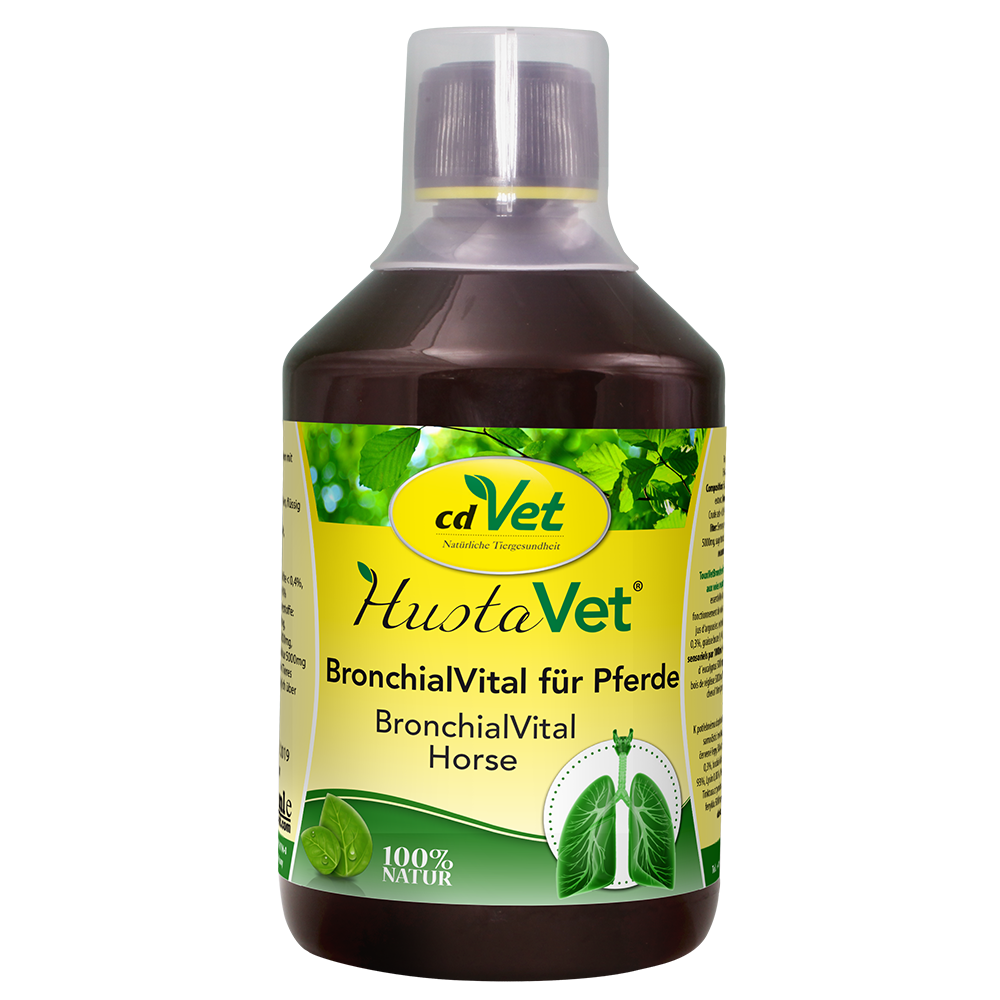
HustaVet BronchialVital Horse 500ml
Complementary feed for horses.For the needs-based feeding of horses with sensitive upper respiratory tract.Improves the self-cleaning mechanism of the bronchium, liquidHustaVet BronchialVital is a liquid Complementary feed to the nutritional support of the function of the upper respiratory tract and the respiratory condition. HustaVet BronchialVital Horse contains essential oils out of thyme, fennel and anise which can improve the self-cleaning mechanism of the bronchial tubes. The ribwort plantain contains mucilagethey lie down protective and soothing effect on the sensitive mucous membranes of the respiratory tract. The bittern of the yarrow and the vermouth benefit the metabolism and the renal function, whereby toxic substances can be excreted more easily.Composition: Fruit vinegar, elderberry juice, beetroot juice, sea buckthorn berry juice, plantain extractAdditives per 1000ml: Sensory additives: Thyme tincture 5000mg, 5000mg anise tincture, Eucalyptus tincture 5000mg, 5000mg sage tincture, fennel tincture 5000mg, 5000mg licorice root tinctureConstituants analytiques: crude protein 0.3%, crude fiber 0.5%, crude ash 0.4%, crude fats 0.2% sodium 0.02%, humidity 93%Feeding recommendation: Add 5-10 ml for at least 14 days 1 times daily via feed or directly into the mouth - depending on the size of the animal
Content: 0.5 Liter (€85.90 / 1 Liter)
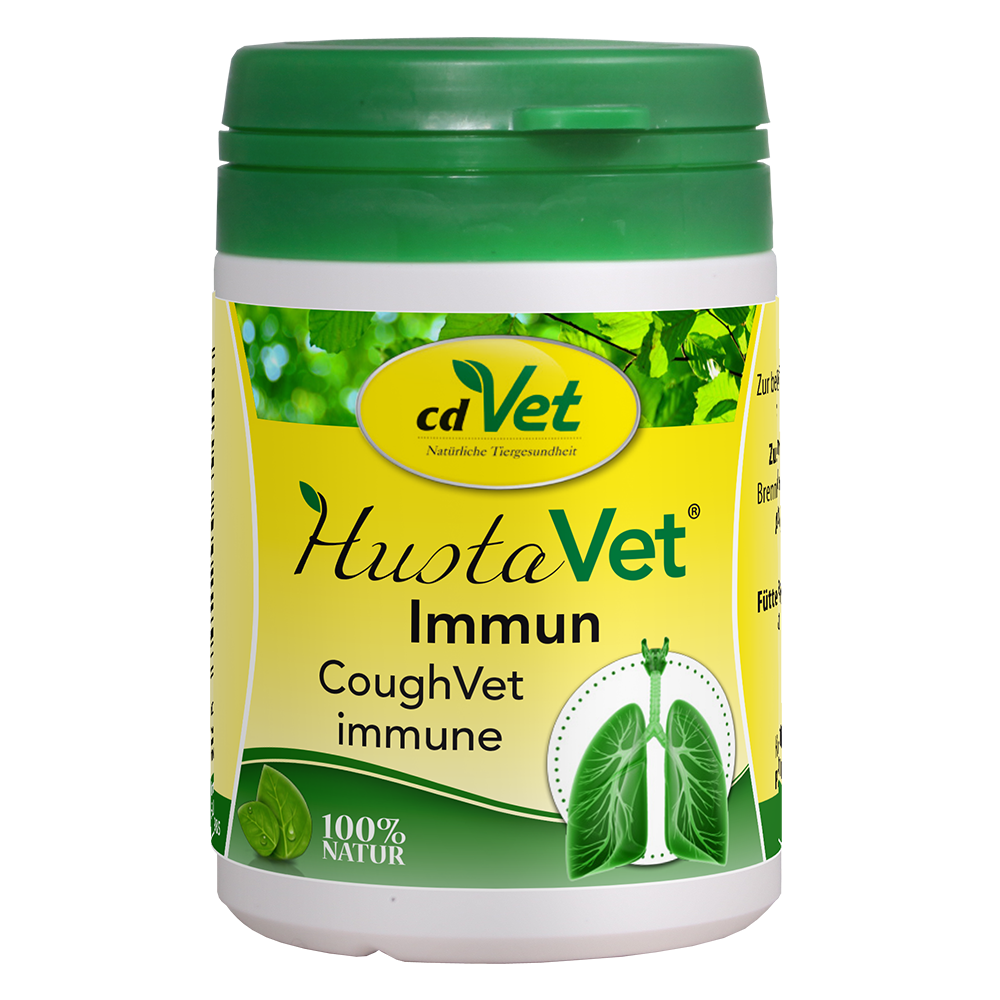
HustaVet Immune 30 g
Complementary feed for dogs, cats, and horsesFor demand-oriented feeding of respiratory sensitive animals. For the support of respiratory function and general condition, structural herbsAnimals with long-standing sensitivities of the respiratory tract function are often impaired in their overall immune defense. Since a large part of the immune defense is ensured via the intestine, HustaVet Immune also contains intestine-optimizing ingredients in addition to respiratory supporting bronchial herbs. The naturally contained vitamins can support the immune system. An optimal supply of vitamins and selected herbs promotes the immune defense and supports the physiological organ functions, e.g. the respiratory tract.contains respiratory supporting bronchial herbs and vitamins that can support the immune systemsupports the physiological organ functions e.g. of the respiratory tractExpert tip: HustaVet Immune has proven itself especially in combination with HustaVet akut (with daily, time-delayed feeding).Composition: linseed, hawthorn, carrot pomace, apple pomace, stinging nettle herb, beetroot, licorice root, spruce needles, thyme, dextrose, birch leaves.Analytical constituents: crude protein 10.4%, crude fat 8.9%, crude fiber 19.8%, crude ash 5,0%, calcium 0.74%, phosphorus 0.26%, sodium 0.03%.Feeding recommendation: Add 1 x daily to the feed. Cats, dogs: 1-2 g/10 kg bodyweight. Horses: 10 g/100 kg body weight. 1 half tsp. corresponds to ca. 0.9 g. 1 tbsp. corresponds to ca. 5.5 g.HustaVet Immune can also be prepared excellently as a tea: Infuse 50 g with 500 ml of boiling water, allow to brew for a few minutes and add to the feed or add to warm mash. It has also been proven to alternate feeding on a daily basis: Day 1: dry herbs. Day 2: herbs as tea. Day 3: cold extract of the herbs.Store it cool and dry.
Content: 0.03 Kilogramm (€498.33 / 1 Kilogramm)
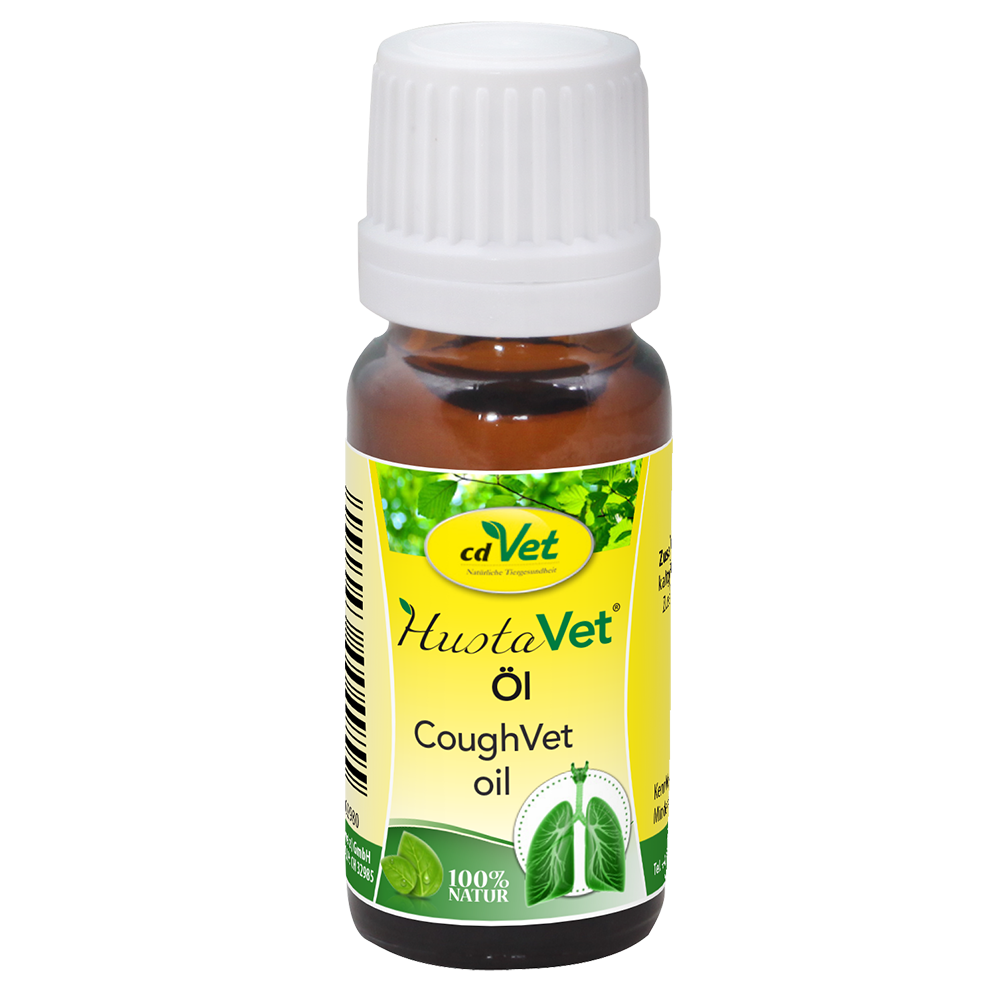
HustaVet Oil 10 ml
Feed material for rodents and birdsFeed material for dogs and horses (from 50ml packaging size)For the nutritional support of respiratory sensitive animals.Black cumin oil plus essential oilsUnique combination of beneficial plant and herbal oils based on our proven Egyptian black cumin oil (first cold pressing from original Egyptian seeds, DAB quality). This makes it the ideal basis for a feed supplement tailored to the needs of respiratory tract sensitive animals. HustaVet Oil is harmoniously rounded off by a composition of high-quality herbal oils from sage, thyme, star anise, fennel and lavender.Composition: Pure Egyptian black cumin oil, cold pressed (DAB quality)Additives per kg: Sensory additives: fennel oil 3.3g, star anise oil 3.3g, sage oil 3.3g, thyme oil 3.3g, caraway oil 3.3g, lavender oil 3.3gFeeding recommendation: if necessary, add 1 - 2 drops over the feedFeeding recommendation (from 50ml packaging size): Dogs: if necessary 4 - 12 drops, depending on body weight, 1 - 2 times a day. Horses: if required daily ponies and small horses 5 - 10ml, big horses 10 - 15mlAfter opening keep cool and dark and consume within 3 months.
Content: 0.01 Liter (€995.00 / 1 Liter)
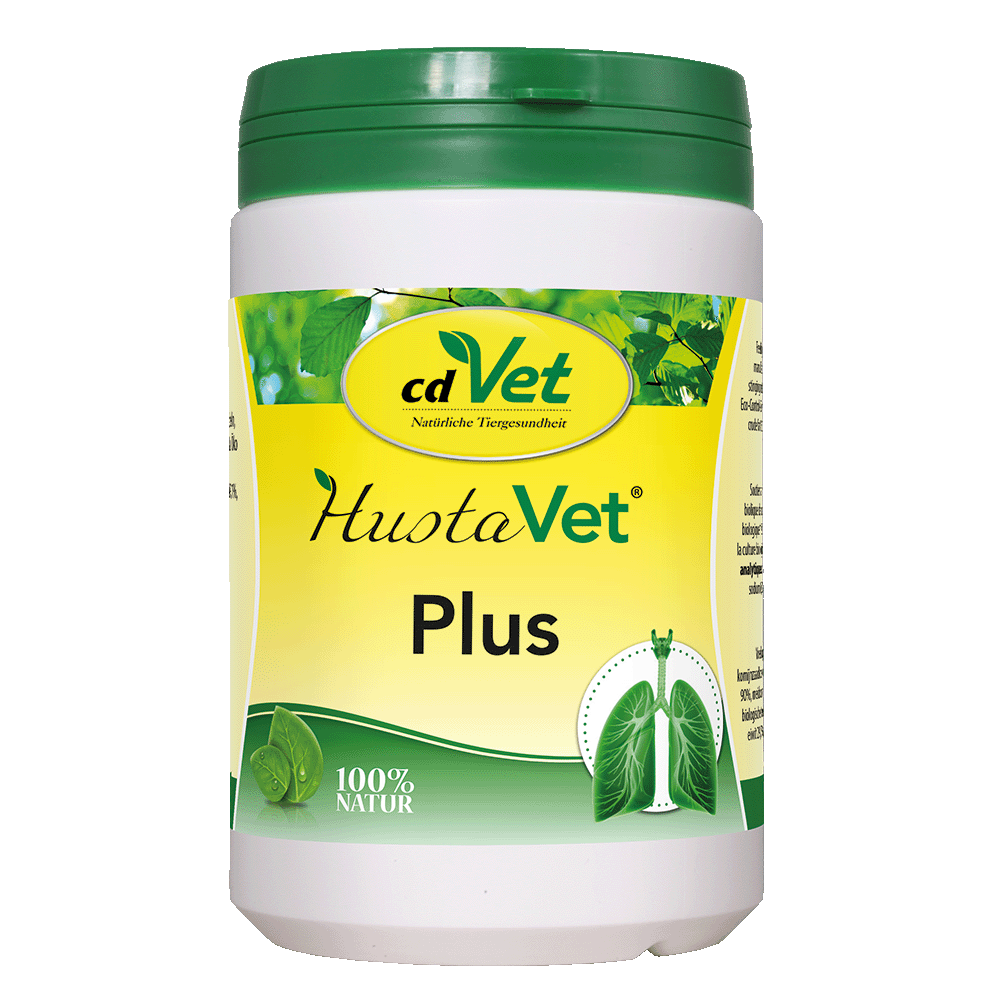
HustaVet plus 450 g
Complementary feed for horsesFeeding-related support for the respiratory tract based on black cumin press cake from our own organic productionThe PLUS for the respiratory tractsOur valuable, gently produced black cumin press cake meets the decades proven HustaVet BreathMix.In contrast to other manufacturers, black cumin press cake still contains a portion of 16 - 17% of residual black cumin oil. This makes it particularly rich and is eaten with pleasure by horses. - Ideal support for autumn and winter months- Particularly suitable for respiratory-sensitive horses- Black cumin press cake from our own organic production- From premium seeds (Nigella sativa), original Egyptian organic cultivationComposition: Organic black cumin press cake*, hawthorn, nettle herb, spruce needles, thyme, licorice root, birch leaf. *from organic farming 90% Eco Control Center DE-ECO-001 not EU Agriculture.Analytical constituents: Crude protein 29.7%, crude fats and oils 16.3%, crude fibre 9.1%, crude ash 6.3%, sodium 0.03%.Feeding recommendation: Depending on the size of the animal 2 - 5 measuring spoons per day.1 measuring spoon is approx. 11.5g.
Content: 0.45 Kilogramm (€26.56 / 1 Kilogramm)
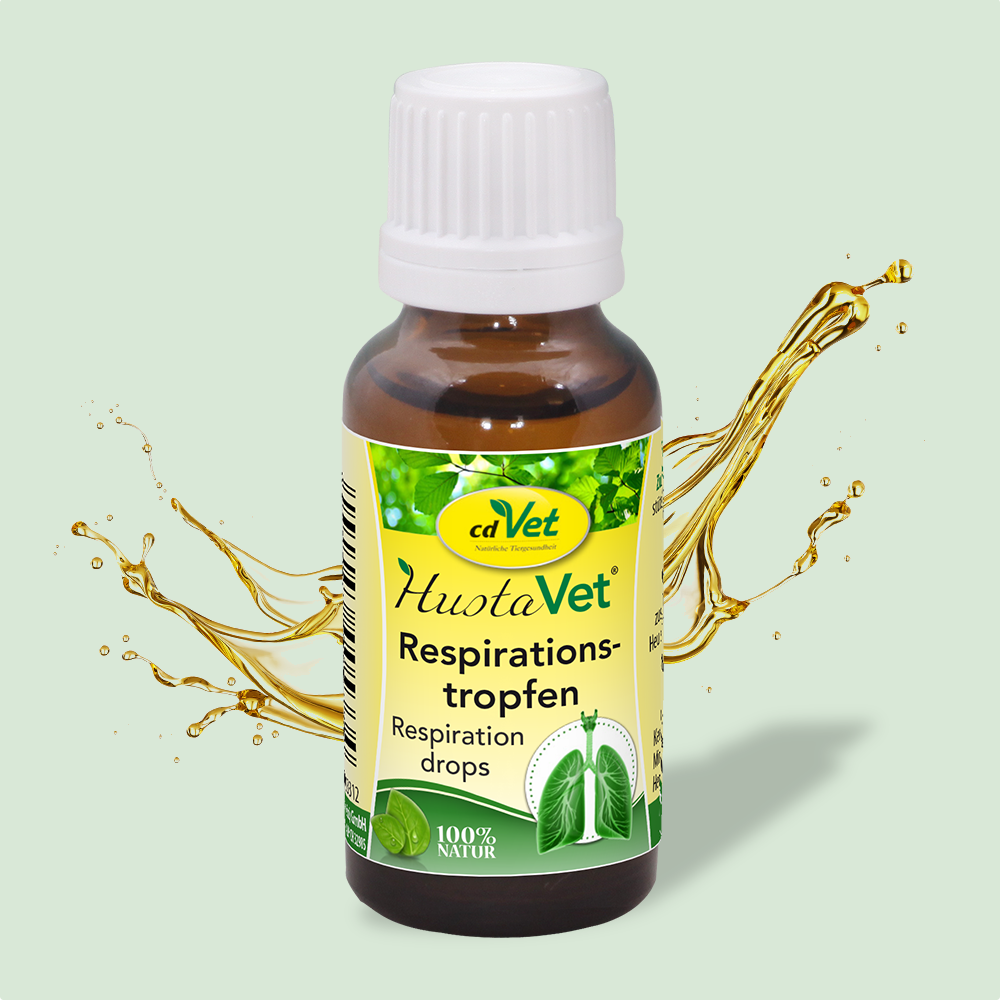
HustaVet Respiration drops
PREMIXTURE of flavouring and appetizing additives for horsesFor the dietary support of respiratory condition and to stimulate the feed intake.Healthy indoor / stable climate with essential oilsHustaVet Respiration drops can stimulate as highly concentrated composition of essential oils of the respiratory tract for improved ventilation.To support a deeper inhalation stimulating strong scent of HustaVet Respiration drops they can be applied diverse.At high sensitivity of the respiratory tract, the immune system can be positively supported with essential oils.Essential oils can clean the air we breathe nicely in rooms and provide a significant improvement of the stable air. Expert Tip:Can also be dripped onto the blanket at winter covering*. Or moisten towels that can be hanged up outside the transport / horse box or similar. It is also possible to dilute a few drops with water and spray in the stable (add 5ml in about 250ml of water and spray with a spray bottle).* Please test the material compatibility in a hidden place before useAlso for dogs and cats an alternative: 1 drop in 50 ml water, moisten towels with it and hang near the sleeping place.Composition: Mixture of flavouring compounds 1,000,000 mg per kg.How to use: Add 5 - 10 drops to the concentrated feed, or spray HustaVet Respiration drops diluted on the hay, depending on the feeding amount 1 - 2 sprays (10ml in about 500ml of water, 20ml to 1 liter of water)
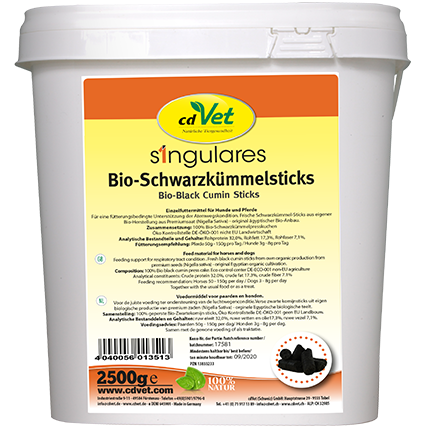
Singulares Bio black cumin sticks 2,5kg
Feed material for horses and dogsFeeding support for respiratory tract conditionBio Black Cumin sticks can contribute to a positive change in the gastrointestinal tract through feeding.This milieu change takes bacteria and fungi the food basis and can make their settlement in the gastrointestinal tract more difficult, the physiological intestinal flora is strengthened.These positive feeding properties of the sticks are based on the carvone contained in the essential oil. Through the excellent properties of the residual oil and the contained roughage, the natural intestinal flora can be additionally supported. A good intestinal flora can contribute to self-regulation when the immune system is disturbed.In addition, the oils contained can nutritionally support the respiratory condition.- Fresh black cumin sticks from own organic production- From premium seeds (Nigella Sativa), original Egyptian organic cultivation- Very high residual oil content 16 - 17% due to the special cdVet cold pressing process- Due to this cdVet cold pressing, organic black cumin oil is gently extracted from the seeds and the valuable press cake is produced- Free of preservatives or other additives- High proportion of unsaturated fatty acids- The sticks contain, of course, all the active ingredients, which are also found in the black cumin oil- Feeding-related support of the respiratory conditionComposition: 100% Bio black cumin press cake.Eco control center DE-ECO-001 non-EU agriculture.Analytical constituents: Crude protein 32.0%, crude fat 17.3%, crude fiber 7.1%.Feeding recommendation: Horses 50 - 150g per day / Dogs 3 - 8g per day.Together with the usual food or as a treat.
Content: 2.5 Kilogramm (€7.98 / 1 Kilogramm)
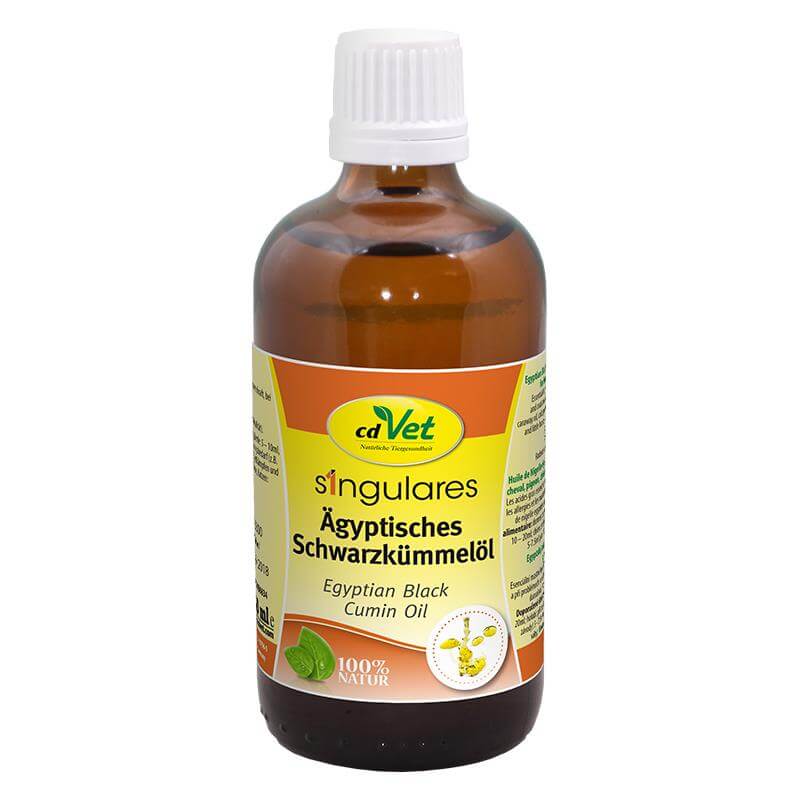
Singulares Egyptian Black Cumin Oil 100 ml
Feed material for horses, pigeons, dogs, and other animalsEssential fatty acids as a feed building block for the defense force, for allergies, and for coat and skin problemsRich in valuable, natural vitamins and essential fatty acids, Singulares Egyptian Black Cumin Oil provides important feeding building blocks for defense. It is also used to support strong performance requirements. • Egyptian black cumin oil from our own production, cold-pressed • From premium seeds (Nigella sativa), original Egyptian cultivation • High content of unsaturated fatty acids • Feeding-related support of the respiratory tract conditionComposition: 100% Egyptian black cumin oil, cold pressed.Analytical constituents: Average fatty acid content: linoleic acid 56.9%, alpha-linolenic acid 0.3%.Feeding recommendation: Add daily to the feed. Ponies/small horses: 5-10 ml. Large horses: 10-20 ml. Pigeons (in case of increased performance requirements, e.g. before and during breeding, in moulting or before competitions and breed shows): 5-7.5 ml/kg feed. Dogs: 2-6 drops depending on body weight. Rodents/ornamental birds: 1-2 drops.Not suitable for cats!Store it cool and dark! Once opened, use within 6 weeks!
Content: 0.1 Liter (€149.50 / 1 Liter)
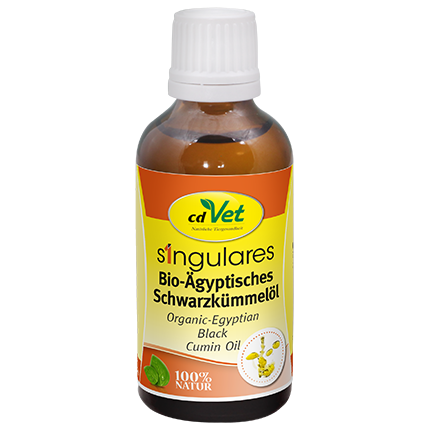
Singulares Organic Egyptian Black Cumin Oil 50 ml
Feed material for horses, pigeons, dogs, and other petsEssential fatty acids as a feed building block for the defense force, for allergies, and for coat and skin problemsRich in valuable, natural vitamins and essential fatty acids, Singulares Organic Egyptian Black Cumin Oil provides important feeding building blocks for defense. It is also used to support strong performance requirements. • Fresh organic black cumin oil from our own manufacture • From premium seeds (Nigella sativa), original Egyptian organic cultivation • High content of unsaturated fatty acids • Feeding-related support of the respiratory tract conditionComposition: 100% pure Egyptian organic black cumin oil (cold pressed).From controlled organic cultivation. Eco-Control-Center DE-ÖKO-001, non-EU agriculture.Analytical constituents: Average fatty acid content: linoleic acid 56.9%, a-linolenic acid 0.3%.Feeding recommendation: Add daily to the feed. Ponies/small horses: 5-10 ml. Large horses: 10-20 ml. Pigeons (in case of increased performance requirements, e.g. before and during breeding, in moulting or before competitions and breed shows): 5-7.5 ml/kg feed. Dogs: 2-6 drops depending on body weight. Rodents/ornamental birds: 1-2 drops.Not suitable for cats!Store it cool and dark! Once opened, use within 6 weeks!
Content: 0.05 Liter (€199.00 / 1 Liter)
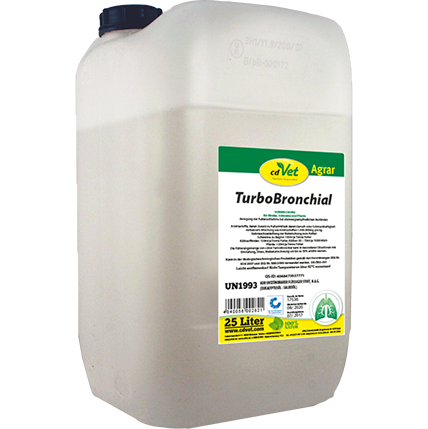
TurboBronchial
PREMIXTURE (liquid, concentrate) for ruminants, calves, pigs, and horsesStimulation of feed intake in livestock sensitive to the respiratory tractThe respiratory tract is where most farms have the greatest performance reserves. Optimal respiratory condition and thus optimized respiration have a positive influence on feed conversion and intake. With optimal respiratory condition, the susceptibility to respiratory infections is low.In nature, the animal would absorb essential oils via the fresh plants. This is hardly guaranteed in the stable keeping of ruminants, calves and pigs. The active substances contained in the essential oils are important for the condition of the respiratory tract and also for digestion. In particular, the cleaning of the respiratory tract is especially important in relation to the high germ and dust load in the stables. TurboBronchial is a matter of course in performance assurance for many farms. It can be used throughout the entire fattening period.Tailored to the different needs of the feeding method, you will find TurboBronchial in different variants:⦁ TurboBronchial (liquid - concentrate)⦁ TurboBronchial Powder⦁ TurboBronchial Drinking Water SG⦁ TurboBronchial Plus⦁ TurboBronchial Liquid⦁ TurboBronchial AirCleanFlavouring compounds: mixture of flavouring compounds 980 g/kg camphor oil, (2b130-eo) 20 g.Directions for use: Ruminants/pigs: 150 ml/t feed. Calves: 50-70 ml/1000 L milk. Horses: 120 ml/t feed. The feeding quantity can be increased by up to 50% in special situations, such as stabling, stress, and weather changes.May be used in ecological/organic production in accordance with Regulation (EU) No. 2021/1165. DE-ÖKO-001, QS-ID 4048473937771.Highly inflammable! Do not expose to temperatures above 42°C!
Content: 25 Liter (€76.16 / 1 Liter)
Signs of bronchitis in horses may include coughing, nasal flapping, increased respiratory rate, and possibly discharge from the nose or eyes. The horse may also show signs of discomfort, such as increased restlessness or reduced willingness to perform. A thorough veterinary examination, possibly including imaging, is important to make an accurate diagnosis and initiate appropriate treatment.
Pneumonia in horses can be identified by a variety of symptoms, including specific breathing sounds. Typical signs include an increased breathing rhythm, a deep, barking cough, and possibly rattling breathing sounds. The exact timbre and intensity of the sounds can vary, and a veterinary examination is required to make an accurate diagnosis and plan the appropriate treatment.
Strange noises when breathing can indicate a variety of respiratory problems, including congestion, mucus buildup, allergies, or even anatomical abnormalities. A veterinarian can make an accurate diagnosis by examining the horse and possibly performing imaging tests such as endoscopy or x-rays. The correct diagnosis is critical to initiating appropriate treatment to improve the horse's respiratory health.
Wheezing when breathing can have various causes. It can indicate respiratory problems such as coughing, infections, allergies or even foreign bodies in the respiratory tract.
Signs of breathing problems in horses can vary. Common symptoms include increased breathing rate, increased effort when breathing, coughing, discharge from the nose or eyes, and overall abnormal breathing sounds. Changes in behavior, such as an increased need for rest or a drop in performance, can also indicate breathing problems.