What the prey wants
Cats are pure carnivores, so the main component of the diet should be muscle meat. Animal fat is also important and is easy to digest for cats, providing essential fatty acids. A food that is too low in fat can be harmful to cats in the long term. Cats also have a high demand for taurine, which they cannot make themselves. It must therefore be contained in their feed or supplemented accordingly.
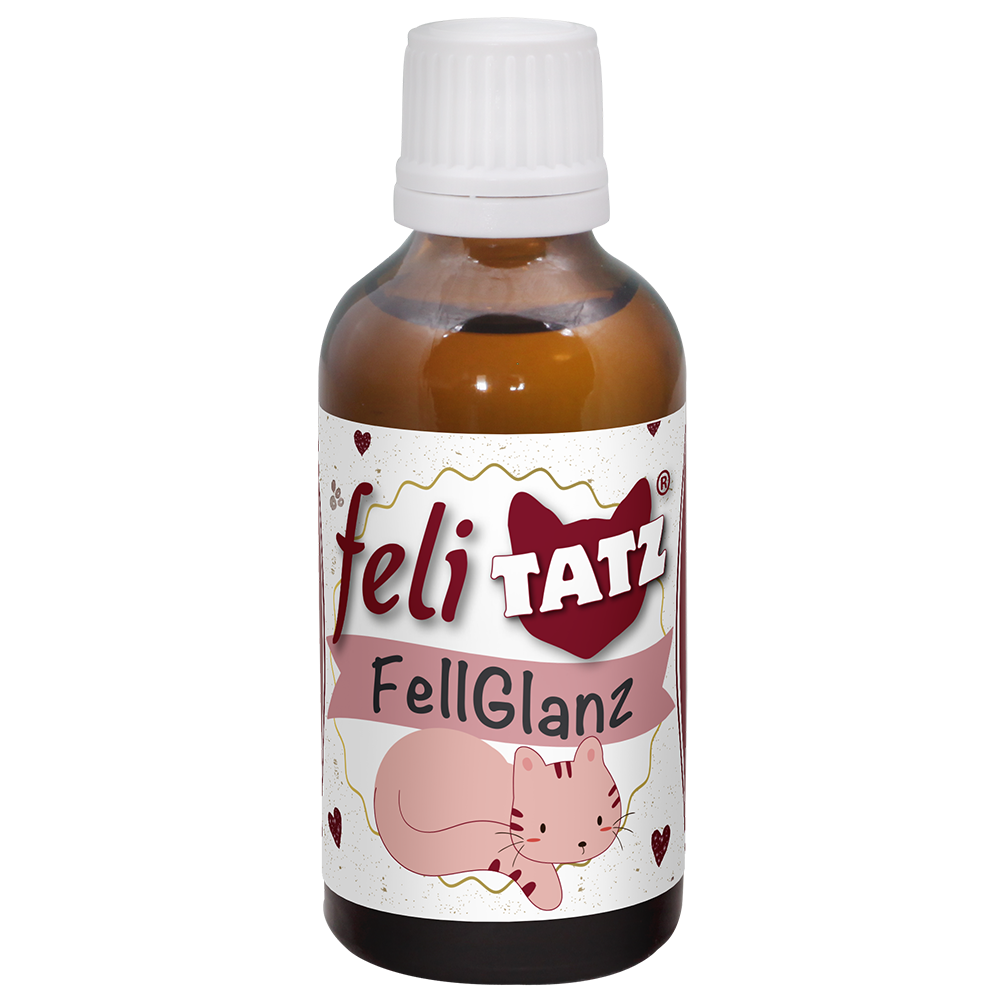
feliTATZ Fur Shine 50 ml
Complementary feed for catsA blend of high quality, cold pressed oils in organic quality and salmon oil for a beautiful and shiny cat furA beautiful and shiny fur can also be influenced by support from the inside. Unsaturated fatty acids perform important tasks in the metabolism and promote skin and hair health. A lack of fatty acids becomes visible through fur changes, dandruff, hair loss, and itching.feliTATZ Fur Shine is a blend of high-quality, cold-pressed plant oils in organic quality with best salmon oil. The added plant oils contribute to a balanced supply of essential fatty acids. The high-quality ingredients give your cat‘s fur shine and suppleness. Due to the salmon oil, feliTATZ Fur Shine is very gladly accepted by cats.Composition: salmon oil 50%, organic hemp oil*, organic evening primrose oil*, organic argan oil**cold pressed, 50% of the ingredients are from organic farming. Eco-Control-Center DE-ÖKO-001, EU/non-EU agriculture.Analytical constituents: crude protein 0.1%, crude fat 99.6%, crude fiber 0.1%, crude ash 0.1%How to use: Add daily 2-3 drops/body weight to the feed.Once opened, keep refrigerated and dark, and use within 6 weeks!
Content: 0.05 Liter (€279.00 / 1 Liter)
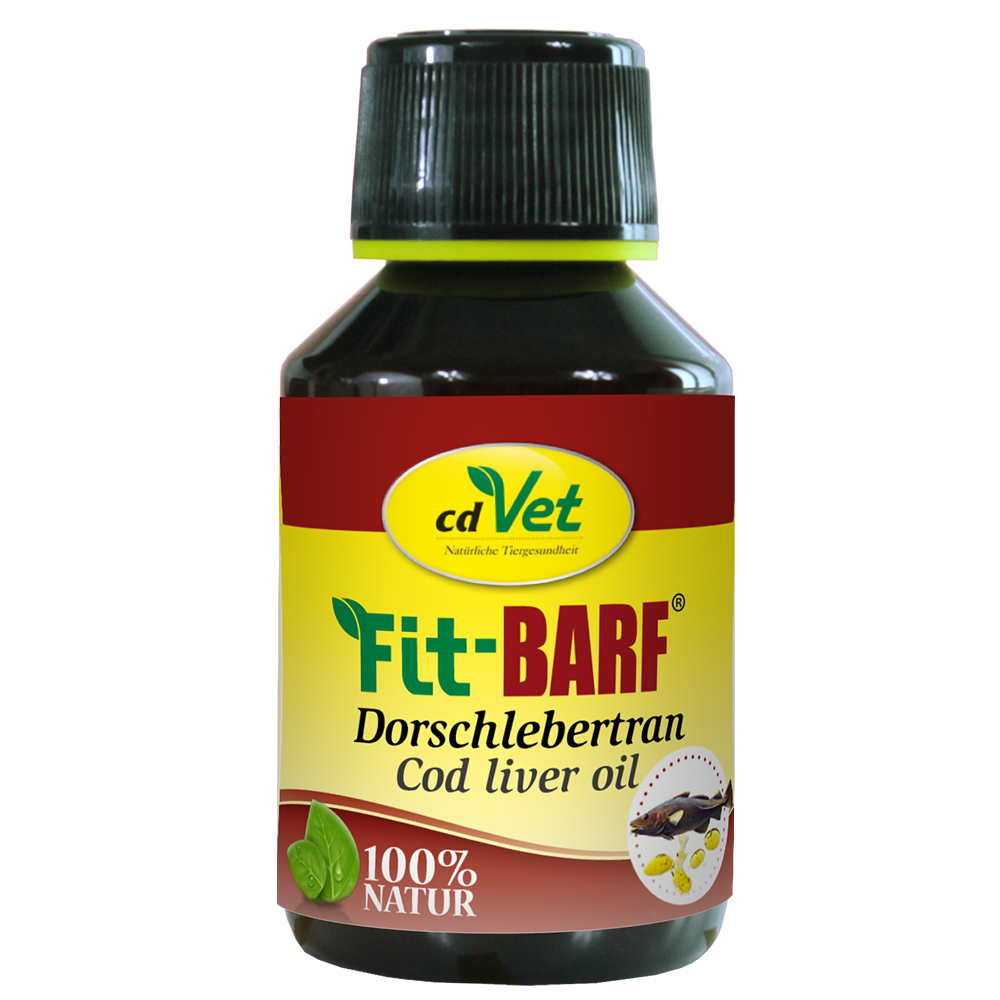
Fit-BARF Cod Liver Oil 100 ml
Feed material for dogs and catsNatural source of omega-3 fatty acids and vitamin DFit-BARF Cod Liver Oil is a high-value supplier for omega-3-fatty acids and vitamin D. Omega-3-fatty acid (for example linolenic acid) are polyunsaturated fatty acids, which cannot be created itselves by the body. Thus they are called essential and must be fed to the organism with the nutrition. Vitamin D is important for the builing of the bones and the regulation of the calcium balance.Composition: 100% Cod liver oil.Feeding recommendation: 1-2 x per week. Small dogs, cats: 0,5 tsp. Midsize dogs: 1 tsp. Large dogs: 1.5 tsp. For daily feeding, we recommend a period of 4-6 weeks.After opening store in cool and dark place and use it within 6 weeks!
Content: 0.1 Liter (€109.50 / 1 Liter)
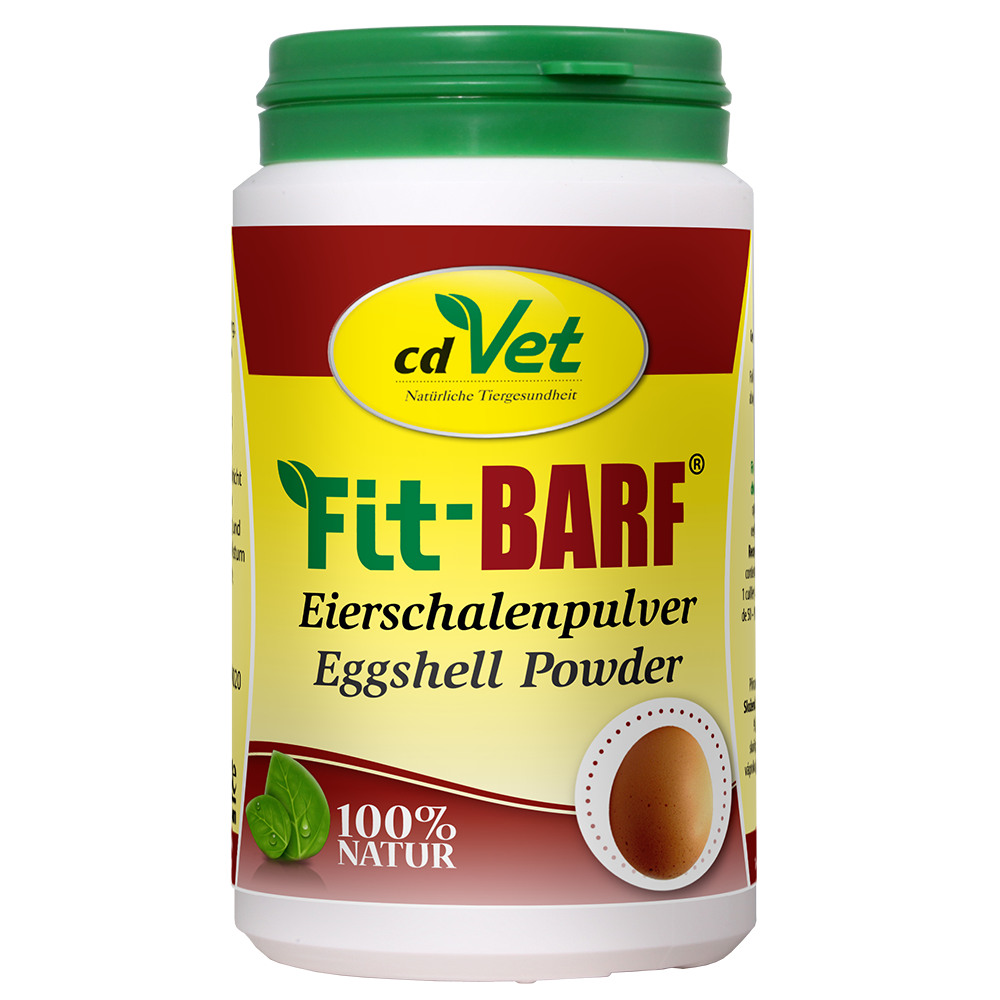
Fit-BARF Eggshell Powder 300 g
Feed material for dogs and catsNatural source of calcium for the demand-oriented supply when feeding raw meat, powderCalcium intake, in particular, plays a major role in the feeding of raw meat. This can only be achieved by feeding sufficient bone. Not every dog can or wants to eat bones, and in the case of cats, feeding whole prey (mice or chicks) is not always problem-free either.Fit-BARF Eggshell Powder is a readily utilizable animal source of calcium for daily feeding. It provides balance when feeding raw meat by balancing the high phosphorus content of the meat with its natural calcium content. Due to the fine degree of grinding, the product has a high bioavailability.neutralization of phosphorus excess with predominant meat feedingfor bone-free feedingas an extra source of calcium in times of increased demand (growth, gestation, lactation)Expert tip: For a safe supply of all important micronutrients, such as minerals, trace elements, and vitamins, we recommend feeding Fit-BARF Mineral.Composition: eggshell powder 100%Analytical constituents: crude ash 95.9%, calcium 37.1%Feeding recommendation: Mix daily into the feed. Dogs: 1.5 g/10 kg body weight. Cats: 0.75 g/5 kg body weight. 1 quarter tsp. corresponds to approx. 1.5.1 g eggshell powder contains approx. 370 mg calcium. The daily requirement of calcium is about 50-90 mg Ca/kg body weight. Gestating and lactating bitches as well as growing puppies need up to 180 mg Ca/kg body weight. If you also feed bones, we recommend reducing the amount.
Content: 0.3 Kilogramm (€36.50 / 1 Kilogramm)
Fit-BARF Feeding Oil 100 ml
Complementary feed for dogs and catsFit-Barf Feeding Oil is a purely natural basic oil and is generally intended as optimal energy carrier.Fit-BARF Feeding Oil is a mixture of high-grated cold-pressed vegetable oils. Cold-pressed, food-grade linseed oil forms the basis of this purely natural feeding oil. This admixed functional oils (evening primrose oil, wheat germ oil, pumpkin seed oil and argan oil) ensures the optimal, well-balanced maintenance with essential fatty acids. Through this combination of pure naturally ingredients Fit-BARF Feeding Oil is a high-concentrated energy source and similarly an origin of significant vital substances of selected oils in one product.Composition:Linseed oil, evening primrose oil, wheat germ oil, pumpkin seed oil, argan oil.Analytical constituents: Crude protein 0.1%, crude fat 99.6%, crude fiber 0.1%, crude ash 0.2.Feeding recommendation: Daily small dogs and cats 0.5 teaspoon, medium dogs 1 teaspoon, large dogs 1.5 teaspoons.After opening, keep cool and dark and use within 6 weeks!
Content: 0.1 Liter (€129.50 / 1 Liter)
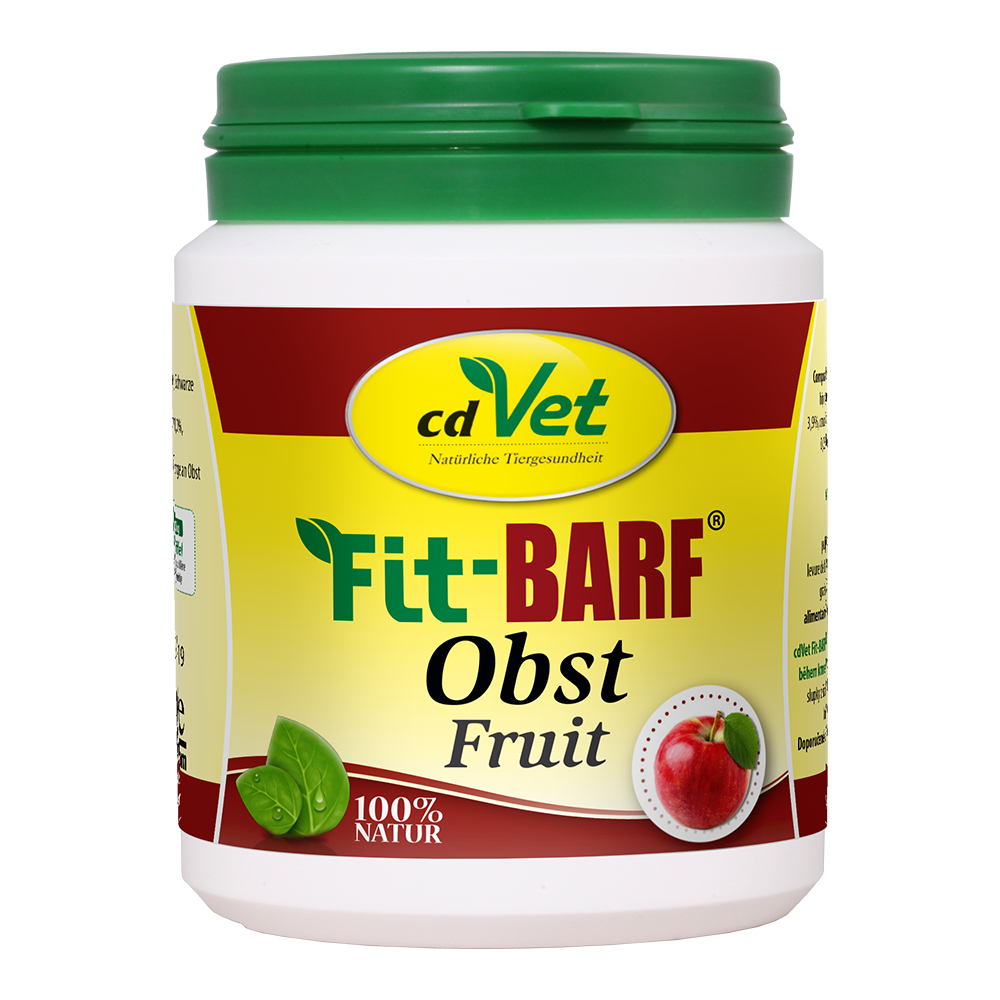
Fit-BARF Fruit 100 g
Complementary feed for dogs and catsFor supplementation of the daily ration with fruit, powderFit-BARF Fruit is made from selected ingredients to enable a well-balanced nourishment with feeding. It complements the requirement of vitamins (Niacin, Riboflavine (B2), folic acids, E, A, K, C), flavonoids (polyphenols) as well as fiber.Fit-BARF Fruit is free of grain and a healthy alternative to vegetables. It does not bring only variety, but also a balance in the BARF feeding plan. In combination with Fit-BARF MicroMineral, the basis is thus laid for healthy raw feeding.Composition: aronia pomace, apple pomace 20.5%, strawberry pomace, black currant pomace, rose hip husks, malt rootlets, brewers‘ yeastAnalytical constituents and levels: crude ash 3.4%, crude protein 11.0%, crude fat 6.1%, crude fiber 25.9%, calcium 0.33%, phosphorus 0.26%Feeding recommendation: Give 4 g/10 kg body weight 1-2 x a week onto the feed. 1 tsp. corresponds to approx. 2.4 g.
Content: 0.1 Kilogramm (€109.50 / 1 Kilogramm)
Fit-BARF Greenshell Mussel 35 g
Feed material for dogs and catsNatural source for taurine and glycosaminoglycans - for the demand-oriented provision at feeding with raw meat, powderThe naturally very high taurine content of the greenshell mussel is a very pleasing aspect for cat owners. Cats in particular depend on a sufficient supply of this organic acid in their food, as they cannot produce taurine themselves and lose a large part of it through their excretions. Taurine is essential for cats. A deficiency can lead to severe impairments and physical damage.Fit-BARF Greenshell Mussel consists of New Zealand greenshell mussel powder (Perna canaliculus, freeze-dried, non-defatted mussel meat). In addition, the greenshell mussel provides important components of the body‘s own mucous membrane as a building block and can thus have a supportive effect on the functionality and elasticity of the urinary bladder and all other mucous membranes. Occasionally fed, the trace elements and vitamins contained in the greenshell mussel can have a positive effect on vitality, metabolism, nutritional imbalances and on stressed skin.Expert tip: Does your dog suffer from joint problems? Then take a look at ArthroGreen Classic. The herbal composition, proven for years, supports your beloved four-legged friend on his daily tours.Growing puppy? Here ArthroGreen Junior offers the nutrients for a safe step into the big, wide world.Composition: New Zealand greenshell mussel powder (Perna canaliculus, freeze-dried, non-defatted mussel meat) 100%Analytical constituents: crude protein 54,1%, crude fat 10,3%Feeding recommendation: Add daily to the feed. Cats: 0.5 g/5 kg body weight. Dogs: 0.5 g/10 kg body weight. 1 half tsp. corresponds to ca. 1.5 g.
Content: 0.035 Kilogramm (€455.71 / 1 Kilogramm)
Fit-BARF GutFlora 100 ml
Complementary feed (liquid, fermented) for dogs and catsSupport of intestinal condition, especially in case of nutritionally disturbed intestinal flora and digestive problemsBillions of tiny microorganisms are found in the intestine. A distinction is made between pathogenic bacteria (pathogens that cause disease) and bacteria that are beneficial for healthy intestinal flora, such as lactic acid bacteria. These ‘good‘ bacteria are hard-working helpers of the immune system and have a positive influence on digestive juices, enzymes, and the intestinal mucosa. The pathogens are properly fought and displaced. In addition, an intact intestinal flora ensures a good digestion.If the natural intestinal flora is disturbed, excessive colonization by pathogens can occur and the dog gets diarrhea. Antibiotic treatments can also attack the protective function - often the drugs do not distinguish between ‘good‘ and ‘bad‘ bacteria. The intestinal flora is disturbed, its defense mechanism functions only to a limited extent and the intestinal wall is adversely affected.The ancestor of our dog - the wolf - therefore also eats the digestive organs of its prey. They contain all the necessary microorganisms for a well-functioning intestinal flora. It is not always possible to feed fresh rumen or omasum. Even frozen they do not compensate for the lack of valuable bacteria and enzymes, as these are destroyed by freezing. This deficiency can be compensated very well with fermented herbs. Therefore, regular feeding with Fit-BARF GutFlora is recommended, even with nutritionally disturbed intestinal flora as well as digestive problems.Displacement of pathogenic bacteriaStimulation of the immune systemImproved digestion of foodMaintenance of intestinal peristalsisComposition: stinging nettle, echinacea, hibiscus, oregano, peppermint, stevia, fenugreek seed, ribwort plantain leaves, licorice root, yarrow herb, wormwood herb, marshmallow roots, thyme, Chinese rhubarb root, anise, fennel, raspberry leaves, cowslip roots, aronia berries pomace, spiny restharrow roots, rosemary leaves, sunflower blossoms, rock salt, sugar cane molassesAnalytical constituents: crude protein 0.2%, crude fiber 0.2%, crude fat 0%, crude ash 0%, moisture 98.3%, sodium 0.03%Feeding recommendation: Add 1.5-2 ml/5 kg body weight to the feed 1 x daily for at least 4-6 weeks. Thereafter, regular feeding is recommended 1-2 x a week or as required.Store it cool and dark, protect from frost!
Content: 0.1 Liter (€109.50 / 1 Liter)
Fit-BARF GutFlora plus 100 ml
Complementary feed (liquid, fermented) for dogs and catsNew, patented manufacturing process - increased efficacy due to improved gastric mobilityNutrition-related support of the intestinal floraBillions of tiny microorganisms are found in the intestine. A distinction is made between pathogenic bacteria (pathogens that cause disease) and bacteria that are beneficial for healthy intestinal flora, such as lactic acid bacteria. These ‘good‘ bacteria are hard-working helpers of the immune system and have a positive influence on digestive juices, enzymes, and the intestinal mucosa. The pathogens are properly fought and displaced. In addition, an intact intestinal flora ensures a good digestion.If the natural intestinal flora is disturbed, excessive colonization by pathogens can occur and the dog gets diarrhea. Antibiotic treatments can also attack the protective function - often the drugs do not distinguish between ‘good‘ and ‘bad‘ bacteria. The intestinal flora is disturbed, its defense mechanism functions only to a limited extent and the intestinal wall is adversely affected.The ancestor of our dog - the wolf - therefore also eats the digestive organs of its prey. They contain all the necessary microorganisms for a well-functioning intestinal flora. It is not always possible to feed fresh rumen or omasum. Even frozen they do not compensate for the lack of valuable bacteria and enzymes, as these are destroyed by freezing. This deficiency can be compensated very well with fermented herbs. Therefore, regular feeding with Fit-BARF DarmFlora plus is recommended, even with nutritionally disturbed intestinal flora as well as digestive problems.Displacement of pathogenic bacteriaStimulation of the immune systemImproved digestion of foodMaintenance of intestinal peristalsisExpert tip: Especially recommended after antibiotic administration and chemical worming.Composition: stinging nettle, echinacea, hibiscus, oregano, peppermint, stevia, fenugreek seed, ribwort plantain leaves, licorice root, yarrow herb, wormwood herb, marshmallow roots, thyme, Chinese rhubarb root, anise, fennel, raspberry leaves, cowslip roots, aronia berries pomace, spiny restharrow roots, rosemary leaves, sunflower blossoms, rock salt, sugar cane molassesAnalytical constituents: crude protein 0.2%, crude fiber 0.2%, crude fat 0%, crude ash 0%, moisture 98.3%, sodium 0.03%.Feeding recommendation: Add 1.5-2 ml/5 kg body weight to the feed 1 x daily for at least 4-6 weeks. Thereafter, regular feeding is recommended 1-2 x a week or as required.Store it cool and dark, protect from frost!
Content: 0.1 Liter (€119.50 / 1 Liter)
Fit-BARF Maerl 250 g
Feed material for dogs and catsNatural source of calcium for the demand-oriented supply when feeding raw meat, powderLithothamnium calcareum is a living stone alga of red color, which turns to white when dried. As a 100% purely natural substance, it has a high content of trace elements and calcium. This makes it ideal for meeting individual calcium requirements and balancing out the surplus phosphorus that needs to be taken into account when feeding with raw meat.Composition: carbonated algae lime 100%.Analytical constituents: calcium 32,9%, ash insoluble in HCl 8.5%.Feeding recommendation: To neutralize the surplus of phosphorus in fresh meat, the following amount is needed per 500 g of meat:Beef without fat / beef heart / turkey meat: ca. 3.5 g. Beef head meat / horse meat: ca. 3 g. Beef rumen: ca. 0.75 g. 1 half tsp. corresponds to approx. 2.7 g. Please note that these figures only serve to neutralize the excess phosphorus in raw meat.The daily requirement of calcium is about 50-90 mg Ca/kg body weight. Gestating and lactating bitches as well as growing puppies require up to 180 mg Ca/kg body weight. 1 g of maerl contains approx. 330 mg of calcium.
Content: 0.25 Kilogramm (€35.80 / 1 Kilogramm)
Fit-BARF MicroMineral 60 g
Mineral complementary feed for dogs and catsFor the demand-oriented of dogs and cats - daily supply of minerals, trace elements, and vitamins, powderFit-BARF MicroMineral contains 100% purely natural ingredients, which are rich in natural, easily available micronutrients, such as minerals, trace elements, vitamins, etc. Due to their plant origin, the detoxification organs are not further burdened, which allows an optimal, natural micronutrient supply of calcium, magnesium, a whole complex of vital trace elements and alginates thus.Special attention should be paid to an optimal micronutrient supply: • in growth • in fur changing • in training and competition use • in breeding • at stress • at problems with fur and skin • at older animals • at metabolism problems and allergiesPossible consequences of nutrient deficiency: • problems with the fur change • flaky skin • dull fur • developmental delay • degeneration of bones and joints • weakened immune system • early signs of aging • susceptibility to stress • birth difficultiesTip of an expert: A disturbed intestinal flora is often another cause of deficiency symptoms. Therefore, a 14-day intensive feeding with cdVet GutClean is recommended. Other symptoms of a nutritional deficiency include eating garbage (such as dirt, excrements, etc.) and a delayed fur change.Composition: maerl, malt rootlets, seaweed meal, grape pips meal, brewers‘ yeast, brewers‘ yeast cell walls (MOS)Analytical constituents: calcium 17.0%, magnesium 1.25%, potassium 0.65%, phosphorus 0.25%, sodium 0.65%, ash insoluble in HCl 6.0%Feeding recommendation: Add daily to the feed. Dogs: 3 g/10 kg body weight. Cats: 2 g/5 kg bodyweight. 1 half tsp. corresponds to approx. ca. 2.1 g.
Content: 0.06 Kilogramm (€182.50 / 1 Kilogramm)
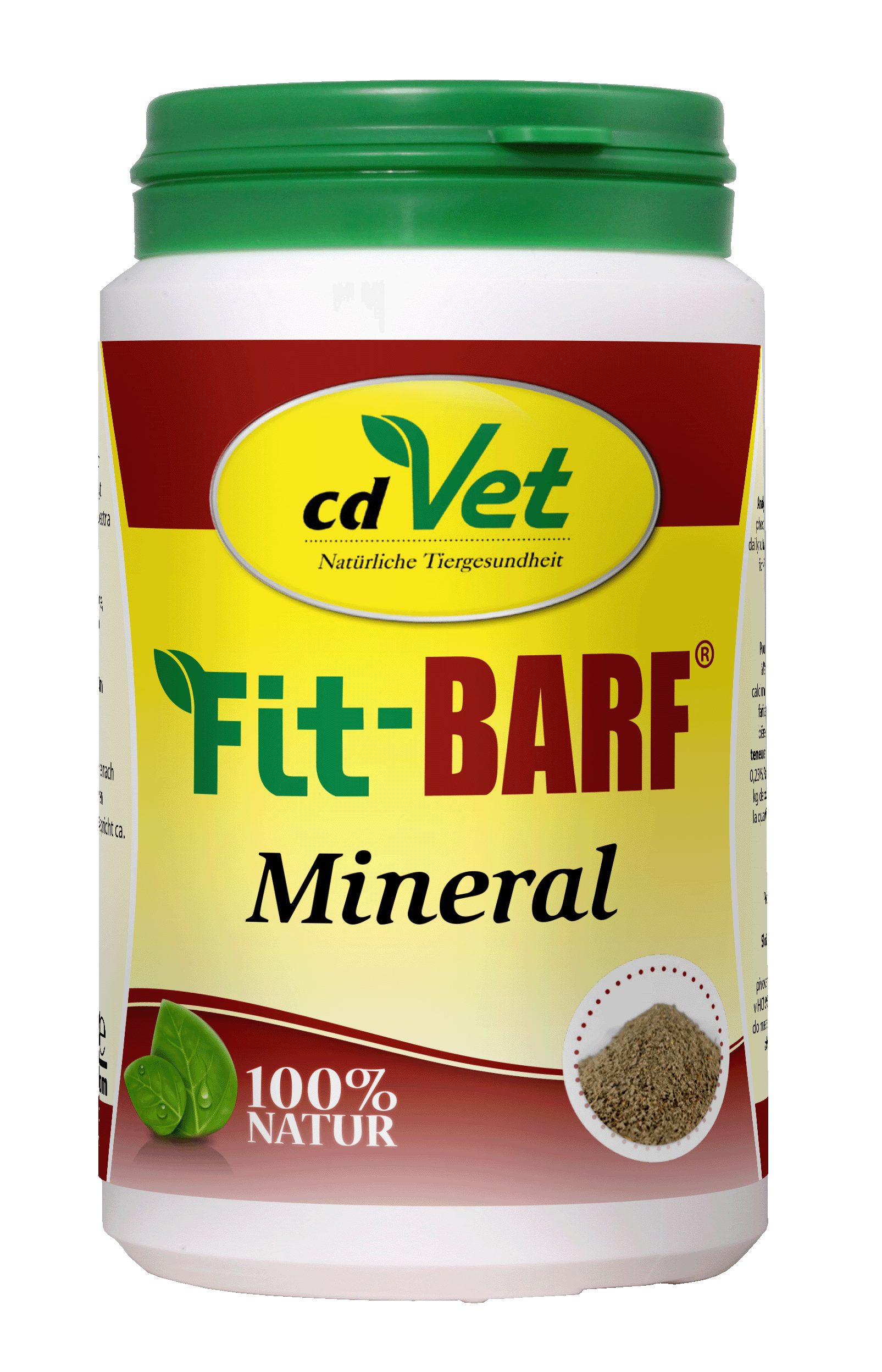
Fit-BARF Mineral 300 g
Mineral complementary feed for dogs and catsFor the demand-oriented calcium supply of dogs and cats when feeding raw - daily supply of minerals, trace elements, and vitamins plus extra calcium, powderMinerals and trace elements are indispensable building blocks of the body. Especially the calcium supply plays a major role in raw feeding. This can only be achieved by feeding sufficient bone. Not every dog can or wants to eat bones, and in the case of cats, feeding whole prey animals (mice or chicks) is not always problem-free. Fit-BARF Mineral offers a well utilizable source of calcium for daily feeding.Composition: eggshell powder, maerl, seaweed meal, malt rootlets, grape pips meal, brewers‘ yeast, brewers‘ yeast cell walls (MOS)Analytical constituents: calcium 27%, ash insoluble in HCl 6%, sodium 0.43%, phosphorus 0,25%Feeding recommendation: Mix ca. 0.8 g/5 kg body weight daily with the meat. As required, it is recommended to double the feeding amount for kittens/puppies and growing young animals. 1 quarter tsp. corresponds to ca. 1.2 g.
Content: 0.3 Kilogramm (€56.50 / 1 Kilogramm)
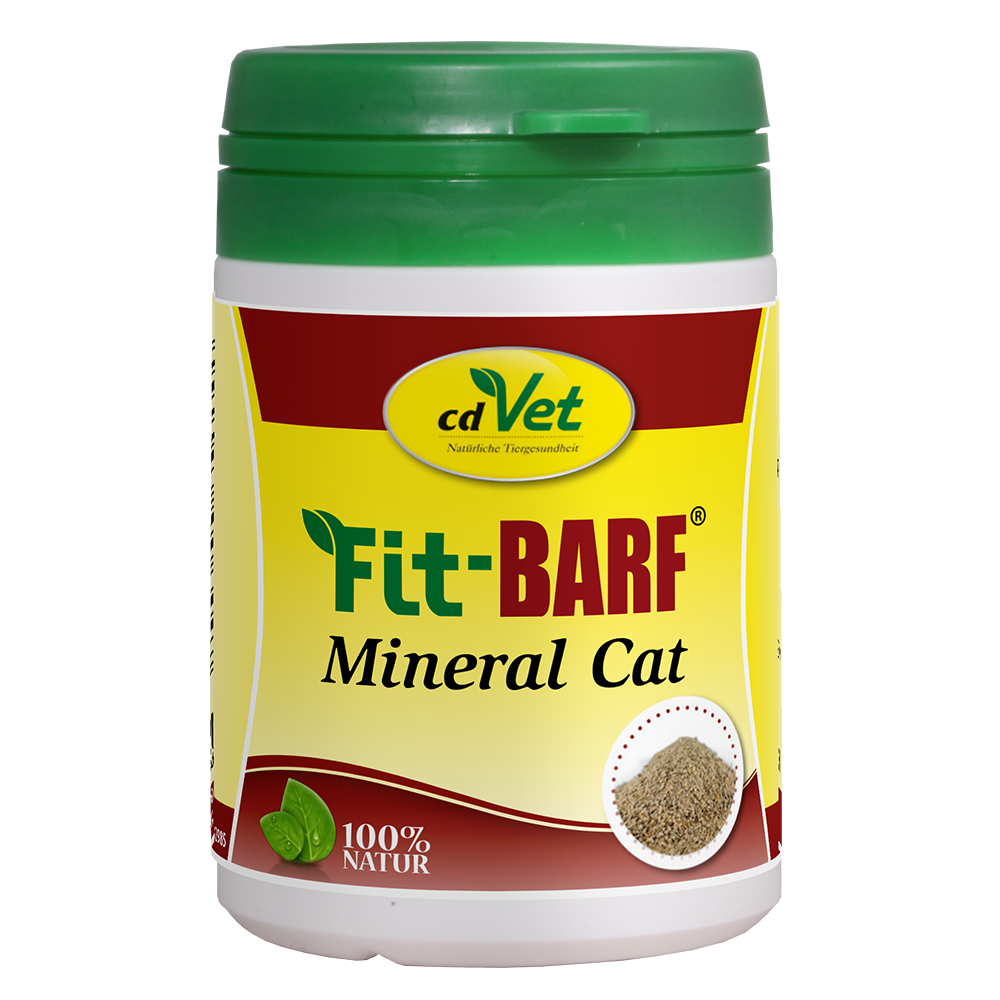
Fit-BARF Mineral Cat 60 g
Mineral complementary feed (powder) for catsHigh quality source of nutrients with New Zealand greenshell mussel powder (non-defatted mussel meat)Fit-BARF Mineral Cat has been developed for the daily basic supply of minerals and vital substances in all areas. The natural ingredients, which are rich in micronutrients such as minerals, trace elements, vitamins, humic acids, taurine and others, can prevent deficiency situations. Calcium intake plays a particularly important role when feeding raw meat. The New Zealand greenshell mussel (non-defatted mussel meat) is a natural source of taurine.Due to the plant-based origin of the micronutrients, the detoxification organs are not further burdened. Fit-BARF Mineral Cat therefore provides an optimal, natural supply of micronutrients.Composition: maerl, malt germs, New Zealand greenshell mussel powder (non-defatted mussel meat, freeze-dried) 10%, seaweed meal, grape pips meal, brewers‘ yeast, brewers‘ yeast cell walls (MOS), organic moringa powder, peat, eggshell powderAdditives/kg: Technological additives: clinoptilolite of sedimentary origins (1g568) 10 g.Total quantity of clinoptilolite of sedimentary origin from all sources shall not exceed the maximum content of 10000 mg/kg.Analytical constituents: calcium 15.2%, magnesium 1.19%, phosphorus 0.31%, sodium 0.68%, ash insoluble in HCl 3.5%Feeding recommendation: Add daily ca. 2 g/5 kg body weight to the feed. 1 half tsp. corresponds to approx. ca. 2 g.
Content: 0.06 Kilogramm (€265.83 / 1 Kilogramm)
The problem seems to be that most vets have never really looked into the topic of BARF in detail – feeding animals is not necessarily a focus of studies. Quite the opposite, this form of nutrition is often not a compulsory subject at many universities. It is also often the case that vets only have those unfortunate cases of "BARF" animals on their treatment tables where something went wrong, and you can understand the doctor's anger.
In the past, when our animals' wild ancestors hunted and killed their prey, they consumed significantly more omega-3 fatty acids than they do today.
Oils also provide more energy, shiny fur and healthy skin. Oils also help release vitamins and are essential: This means that the body cannot produce these fatty acids itself and is dependent on them being supplied through food.
BARF is probably the most natural form of nutrition that you can feed your cat if it is not an outdoor cat and is therefore self-sufficient. If done correctly, this type of nutrition is good for cats.
An average cat needs around 35 g of food per kilogram of body weight per day during normal physical activity. For a 4 kg cat, that would be 140 g of fresh meat per day.
The most important are probably essential fatty acids, such as those found in salmon oil or wheat germ oil (vitamin E) in a form that is easily digestible for cats. Taurine should also always be kept in mind when feeding cats raw food and supplemented if necessary.