
Support of bladder and kidneys
With the natural herbs and minerals of the cdVet products you can optimally support the bladder and kidneys of the horses. These contain high-quality herbs, minerals and strengthen the urge to urinate. The organs are supplied with the necessary means to support health.
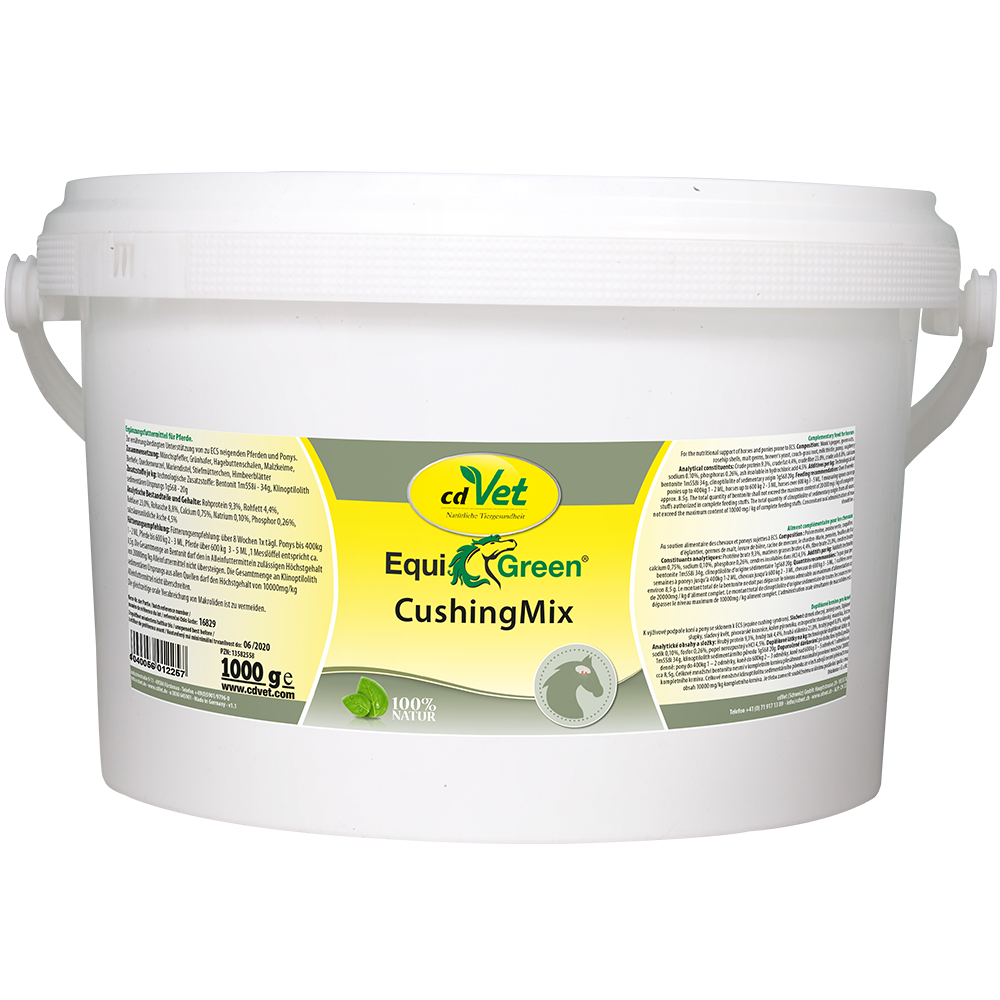
EquiGreen CushingMix 1 kg
Complementary feed for horsesFor the nutrition-related support of horses and ponies prone to ECS, powderEquiGreen CushingMix is specially designed to meet the nutritional needs of horses and ponies with metabolic problems. It contains important vital substances from purely natural sources, which are readily available and do not further burden the organism and its detoxification organs, which are already stressed in these cases. With its balanced composition based on some selected herbs, EquiGreen CushingMix is an ideal feed complement for affected animals.Composition: monk’s pepper fruit, green oat, rose hip hucks, brewers‘ yeast cell walls (MOS), couch gras root, milk thistle herb, raspberry leaves, pansy herb.Additives/kg: Technological additives: bentonite (1m558i) 34 g, clinoptilolite of sedimentary origin (1g568) 20 gThe total amount of bentonite must not exceed the permitted maximum level in complete feedingstuff of 20000 mg/kg of complete feedingstuff. Total quantity of clinoptilolite of sedimentary origin from all sources shall not exceed the maximum content of 10000 mg/kg.Analytical constituents: crude protein 9.3%, crude fat 4.4%, crude fiber 23.0%, crude ash 8.8%, ash insoluble in HCl 4.5%, calcium 0.75%, sodium 0.1%, phosphorus 0.26%.Feeding recommendation: 4.3 g/100 kg body weight for 8 weeks 1 x daily. 2 tsp. correspond to approx. 3.8 g.The simultaneous oral use with macrolides shall be avoided.
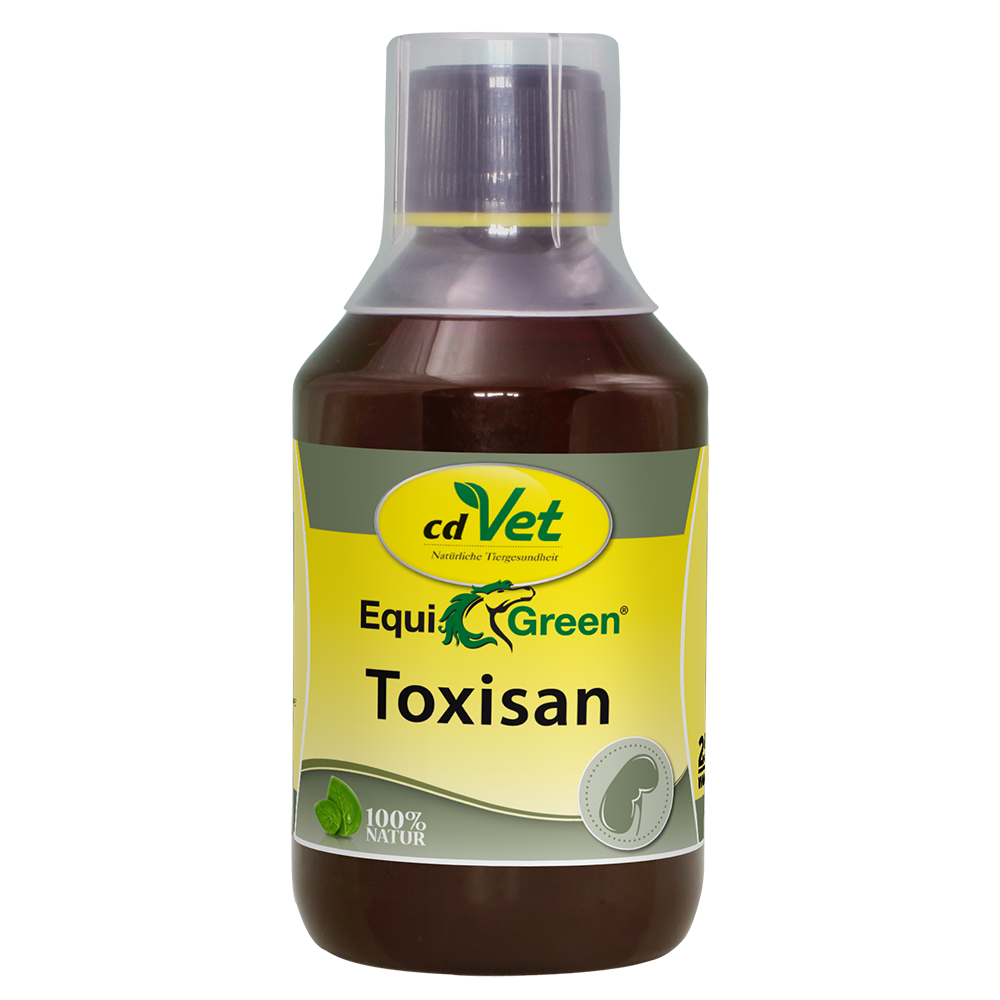
EquiGreen Toxisan 250 ml
Complementary feed for horsesFeeding-related support of the whole metabolism, of liver and kidneys, liquidEquiGreen Toxisan is specifically designed to meet nutritional-related needs of horses and ponies. A strengthening of the detoxification organs, liver and kidneys, is helpful to support the whole metabolism. The blend of herbal extracts of EquiGreen Toxisan, adapted to the stimulation of the detoxification organs, can be quickly absorbed and directly utilized by the body, thus supporting the detoxification processes.Expert tip: As a supplementary, year-round supply of mineral and humic substances, EquiGreen HuminoMineral is recommended. During the grazing season, EquiGreen ToxiVet sorb should be fed additionally.Composition: stinging nettle extract, birch extract, wild pansy extract, marigold extract, mountain arnica extract.Additives per L: Preservatives: lactic acid E270 47.5 g. Sensory additives: ginkgo tincture 70.9 g, milk thistle tincture 23.6 g, goldenrod tincture 23.6 g.Analytical constituents: crude protein 0.3%, crude fiber 0.5%, crude ash 0.4%, crude fat 0.2%, moisture 93%, sodium 0.02%.Feeding recommendation: Shake before use. If required, mix 1-2 ml/100 kg body weight 2 x daily with the feed or give it directly into the mouth. For year-round demand 1 x daily 0.5-1 ml/100 kg body weight.
Content: 0.25 Liter (€215.80 / 1 Liter)
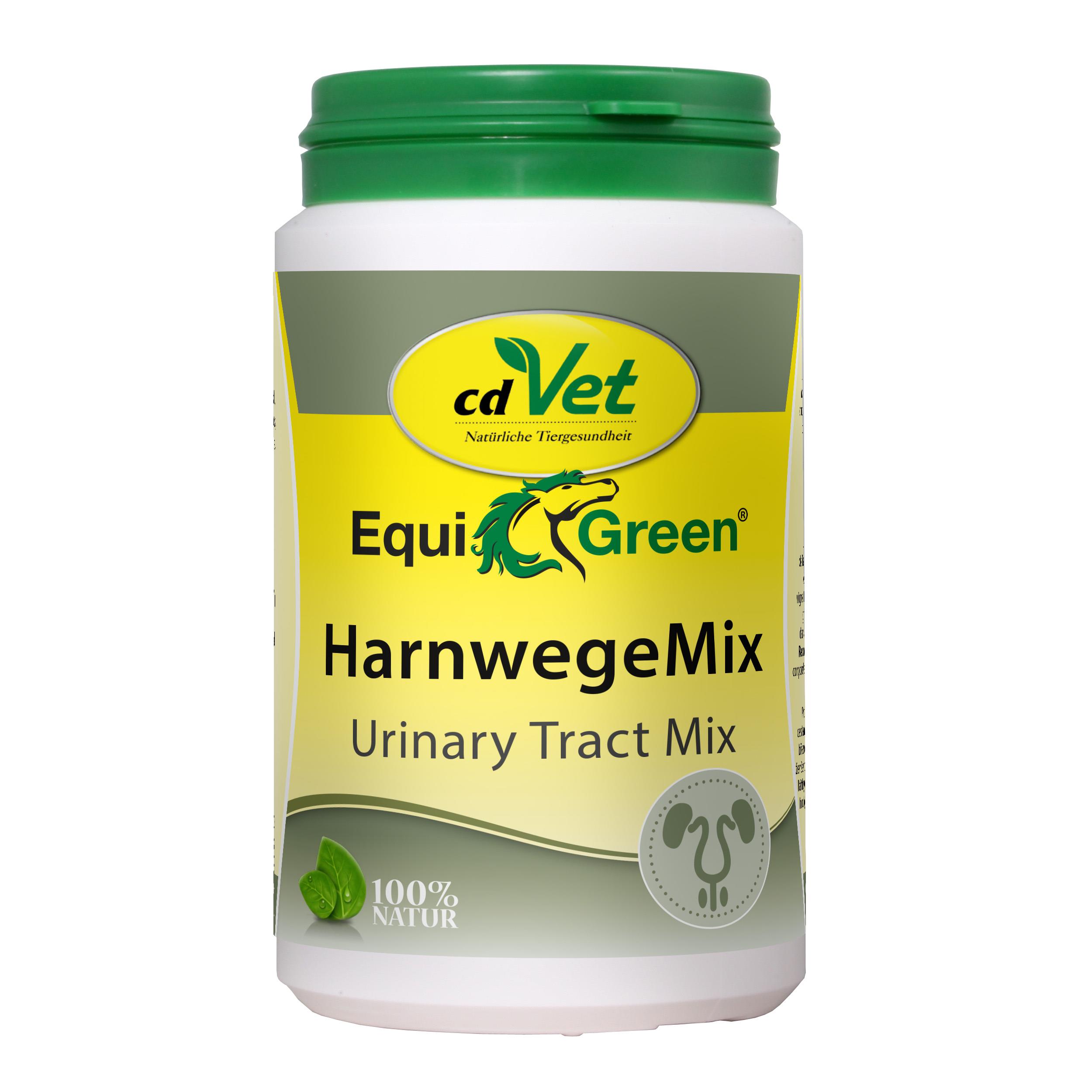
EquiGreen Urinary Tract Mix 150 g
Complementary feed for horsesFor therapy-accompanying feeding in horses prone to urinary tract problems, powderEquiGreen Urinary Tract Mix contains a variety of high quality herbs and minerals. Those have an intensifying effect on the urge to urinate and thus promote the excretion of negative bacteria which are frequently involved in urinary tract problems.Especially for horses sensitive to urinary tractSupports kidney functionOptimizes the supply of vitamins and trace elementsComposition: grape seeds meal, dead nettle herb, bean pods, blackberry leaves, field horsetail herb, propolis, lemon balm leaves, oak bark, willow bark, ginseng root, bonest herb, grape leaves, chamomile blossoms.Additives/kg: Technological additives: diatomaceous earth (E551c) 75 g.Analytical constituents: crude protein 14.5%, crude fat 1.6%, crude fiber 25.1%, crude ash 18.6%, ash insoluble in HCl 10.0%.Feeding recommendation: Add 2.3 g/100 kg body weight daily to the feed as required for 14-30 days. 1 tsp. corresponds to ca. 2.3 g.
Content: 0.15 Kilogramm (€473.00 / 1 Kilogramm)
Dark urine in horses can indicate a variety of causes. One possible explanation is an increased concentration of waste products in the urine, which could indicate dehydration. Blood in the urine due to bladder or kidney problems is another possibility. Changes in the color of the urine should be closely monitored, as they could indicate potential health problems. If dark urine persists, it is advisable to consult a veterinarian for an accurate diagnosis and appropriate measures.
To promote kidney regeneration, it is important to ensure adequate fluid intake to support the kidneys by flushing out waste products. A kidney-friendly diet that monitors protein levels and favors low-salt foods can be helpful. In addition, herbs such as nettle and dandelion, which have anti-inflammatory properties, can be beneficial for the kidneys.
Substances such as excessive amounts of salts, especially sodium, and certain medications can harm the kidneys. Inadequate water intake and chronic stress can also increase the risk of kidney dysfunction. The exact amount of daily horse urine varies depending on the horse's size, activity level and diet. On average, a horse produces about 25 to 50 liters of urine per day. Adequate water supply is important to support kidney function and minimize the risk of kidney problems.
A horse's bladder infection can manifest itself through increased urination, restlessness during urination, signs of pain or discomfort in the abdominal area and possibly changes in behavior. Horse urine is usually straw yellow to amber in color. However, with a bladder infection, the color can vary and the urine can become cloudier or darker. Unusual changes in urination behavior and color should be closely monitored as they could indicate possible problems in the urinary tract. If a bladder infection is suspected, it is advisable to seek veterinary advice.
Signs of kidney problems in horses can include increased drinking and urination, loss of appetite, weight loss, poor coat, dehydration, lameness and general lethargy. Changes in the urine, such as darkening or the presence of blood, can also indicate kidney problems. If these symptoms occur, it is important to seek immediate attention and professional care to ensure appropriate diagnosis and treatment.