Strong teeth for strong animals
Dental care and general oral hygiene nourishes and protects the teeth and gums of cats. If done regularly and thoroughly, it can also prevent plaque and tartar. In the short term, it also helps against unpleasant breath. Following your cat's oral hygiene contributes to their well-being and overall health.
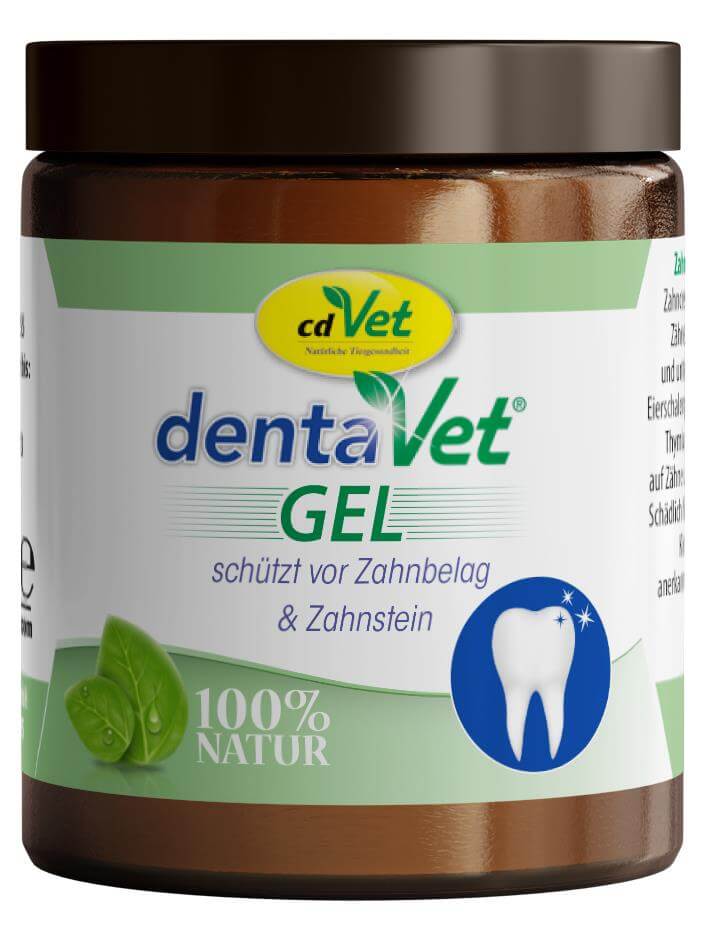
dentaVet Gel 35 g
Care product for dogs and catsToothpaste and dental care in one productdentaVet Gel, the gentle dental care for your pet. Regular dental care should also be a matter of course for dogs and cats. Just like with humans, dental plaque and tartar can form with them. In addition, a lack of dental and mouth care often results in inflammations of the gum and mouth rot.dentaVet Gel contains natural care substances that promote optimal oral hygiene. Zeolite, like many mineral earths, can act as a purely natural filter. Its binding property harmonizes the mouth flora by absorbing bacteria and acids. The natural, fine abrasive particles of the eggshell powder gently remove dental plaque without attacking or damaging the sensitive tooth enamel. This combination, in conjunction with the valuable essential oils of frankincense and fennel, gently removes dental plaque and penetrates till deep into the oral cavity, unpleasant respiratory odour is reduced and the natural oral flora is supported.However, not every animal will voluntarily keep still when you approach its muzzle with a toothbrush. Here, dentaVet Gel offers an excellent alternative. Due to the simple application (apply briefly, the animal brushes its teeth alone on its own), daily dental care becomes a stress-free affair. With regular use, the teeth are gently cleaned and protected from dental plaque.Expert tip: To apply, a gauze bandage is best suited or a microfiber cloth.Composition: organic hempseed oil, zeolite, eggshell powder, grapefruit seed extract, frankincense oil, sage oil, star anise oil, fennel oil, thyme oil, clove oil.Application recommendation: apply 2 x a week evenly on teeth and gums.Store it cool and dark!Contains frankincense oil, fennel oil sweet, star anise oil and eugenol. May produce an allergic reaction. Harmful to aquatic life with long lasting effects. Keep out of reach of children. Avoid release to the environment. Dispose of contents/container to an authorized waste disposal facility.
Content: 0.035 Kilogramm (€484.29 / 1 Kilogramm)
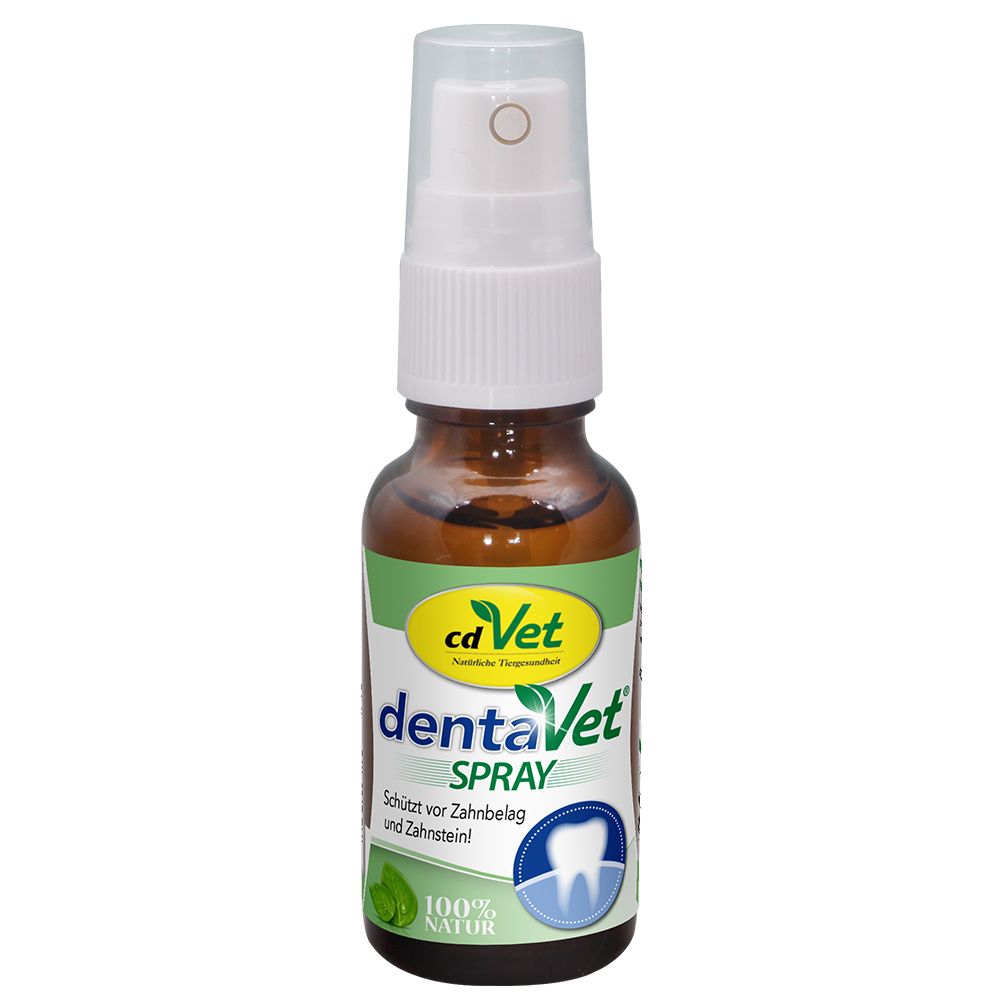
dentaVet Spray 20ml
Care product for animalsFor a healthy mouth flora with calendula and boswellia oilBacteria and fungi often form a mouth flora, which negatively affect the health. Inflammation of the gums, mouth rot, tartar, tooth loss are also often the direct consequences - loss of appetite, pain in the mouth area, unpleasant mouth odor, but also further in the body scattering of infection are unfortunately not uncommon. Therefore, optimal care and mouth hygiene is especially in sensitive animals is an important contribution to the health and well-being.DentaVet spray contains the valuable oils of calendula, Boswellia and pine.- cares the teeth and gums- Odor and gum tonic- Provides an effective supplement to the tooth and mouth hygieneTip of an expert: Please think of a healthy intestinal flora and a healthy metabolism also at mouth problems.Composition:Aqua, Calendula, natural emulsifier, Boswelliaöl, pine oil.Instructions for use:Spray as needed several times daily on the teeth and gums.Store in cool and dark places! Before use shake well!
Content: 0.02 Liter (€647.50 / 1 Liter)
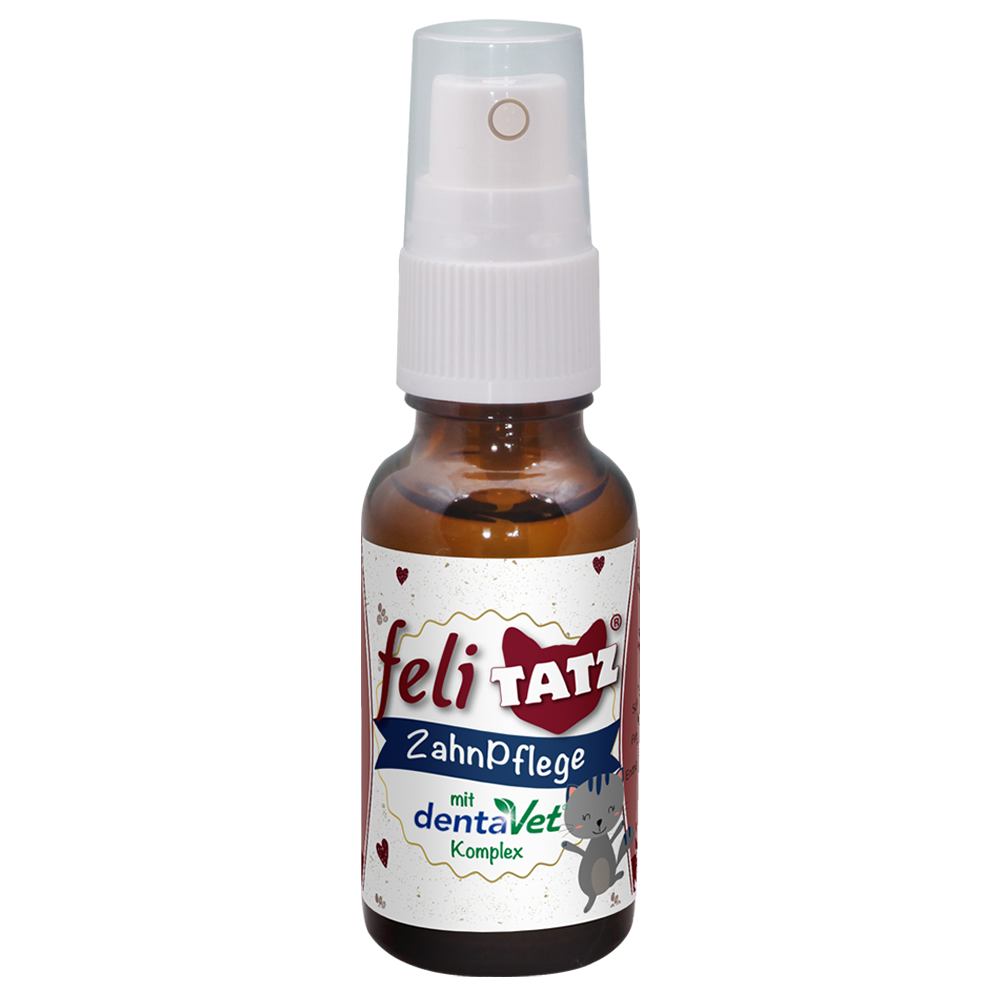
feliTATZ dental care 20ml
Care product for cats.Maintains the teeth and gums, protects against plaque and tartar, absorbs unpleasant breath odor and supports the natural mouth flora.Bacteria and fungi form often a mouth flora, which adversely affect the health. Inflammation of the gums, mouth rot, dental calculus formation, tooth loss are also often the direct consequences - loss of appetite, pain in the jaw area, unpleasant mouth odor, but also further in the body scattering of infection are unfortunately not uncommon.Therefore, an optimal care and mouth hygiene is especially in sensitive animals is an important contribution to the health and well-being. feli TATZ dental care contains valuable oils from Boswellia, sage, star anise, fennel, thyme and clove.- cares the teeth and gums- Odor and gum tonic- Provides an effective supplement to the tooth and mouth hygiene- More adherent by the oily consistency- Suitable without spraying sound, therefore suitable for sensitive animalsExpert Tip: Please also think of a healthy intestinal flora and a healthy metabolism at mouth problems.Composition: Organic hemp oil, organic argan oil, Boswelliaöl, sage oil, star anise oil, fennel oil, thyme oil, clove oil.How to use:Spray once daily on the teeth and gums as needed.Store in cool and dark place! Shake well before use!
Content: 0.02 Liter (€597.50 / 1 Liter)
Plaque and tartar can have serious health consequences if they are not removed. The bacteria that are there not only attack the teeth, but can also encourage the development of tooth decay.
No! Real and stuck tartar is a case for the vet. The risk of injury to the cat is simply too high if you try to remove it. But you can take preventive measures to prevent it from getting that far.
If the cat is an outdoor cat, it will usually care for its teeth all by itself by catching small prey and eating it with bones and fur. This natural form of nutrition is also the best way to care for the teeth. If your cat is only indoors, you can try to support dental care with species-appropriate food and special dental care products.
Tartar and plaque or damaged teeth can be responsible for bad breath and should be checked.
Cleaning your cat's teeth can also be useful and necessary. Check your cat's teeth regularly. The teeth should be free of plaque and tartar and the gums should not be red or swollen. If you notice changes in your cat's usual eating behavior, you should always have the teeth checked.