Everything about fur and skin
The skin is the largest organ in the body. This reflects the entire metabolic action of the horse. If anything in the horse's body is off track, it is reflected in the coat and skin. In order to optimally support the skin and the coat from the inside and out, you will find the cdVet range of products here.
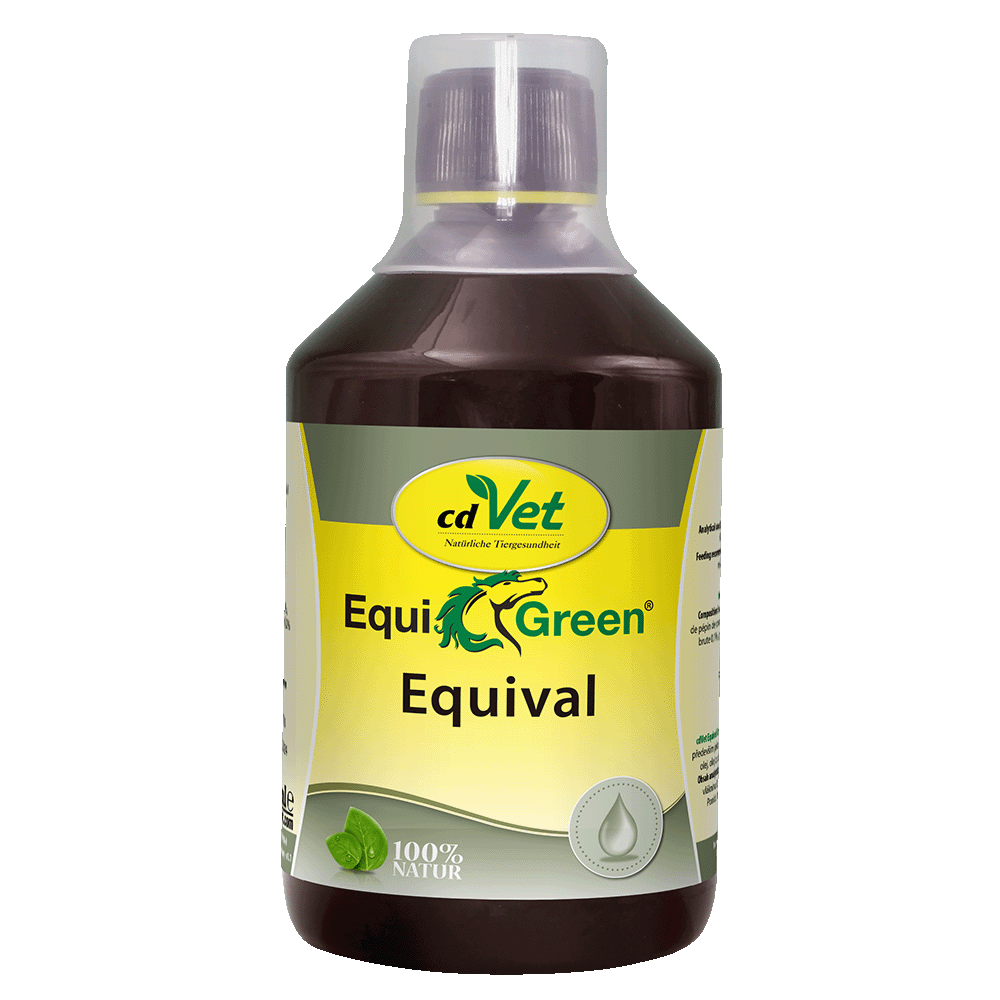
EquiGreen Equival 500 ml
Complementary feed for horsesEquiGreen Equival is a pure natural base oil and primarily intended as an optimal source of energyFeeding oil - with essential fatty acidsEquiGreen Equival is a mixture of high-quality cold-pressed vegetable oils. Cold-pressed food grade linseed oil forms the basis of this purely natural food oil. By the admixed function oils (evening primrose oil, wheat germ oil, pumpkin seed oil and argan oil) optimal, balanced supply is secured with essential fatty acids.Composition: linseed oil, evening primrose oil, wheat germ oil, pumpkin seed oil, argan oil.Analytical constituents: crude protein 0,1%, crude fat 99.6%, crude fiber 0,1%, crude ash 0,1%, sodium 0,02%.Feeding recommendation: as required, ponies: 10-30 ml, horses: 20-60 ml.After opening store in a cool and dark place, and use within 6 weeks!
Content: 0.5 Liter (€45.90 / 1 Liter)
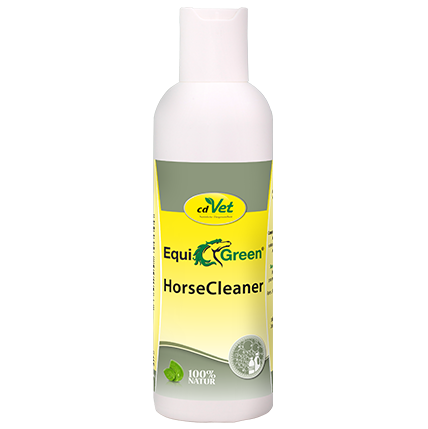
EquiGreen HorseCleaner 200ml
Care product for horsesNatural Shampoo Concentrate with lubricating effectEquiGreen HorseCleaner is a pH neutral care shampoo for sensitive skin. It nourishes the skin naturally with lipid balancing effect and gives new shine to the coat. The skin is cleansed deeply and scurf is prevented. EquiGreen HorseCleaner is very efficient.Composition: aqua, cocamidopropyl betaine, lauryl polyglucose, coco glucoside, melaleuca alternifolia, citrus grandis oil, wheat protein hydrolysate, simmondsia chinensis oil, cymbopogon nardus oil, potassium sorbate, sodium benzoate, citric acid.Recommendations for use: dilute 1:5 before use, massage into the wet coat, rinse well after 2-3 minutes, then repeat the process and leave the foam to act for 5 minutes, rinse thoroughly.
Content: 0.2 Liter (€89.75 / 1 Liter)
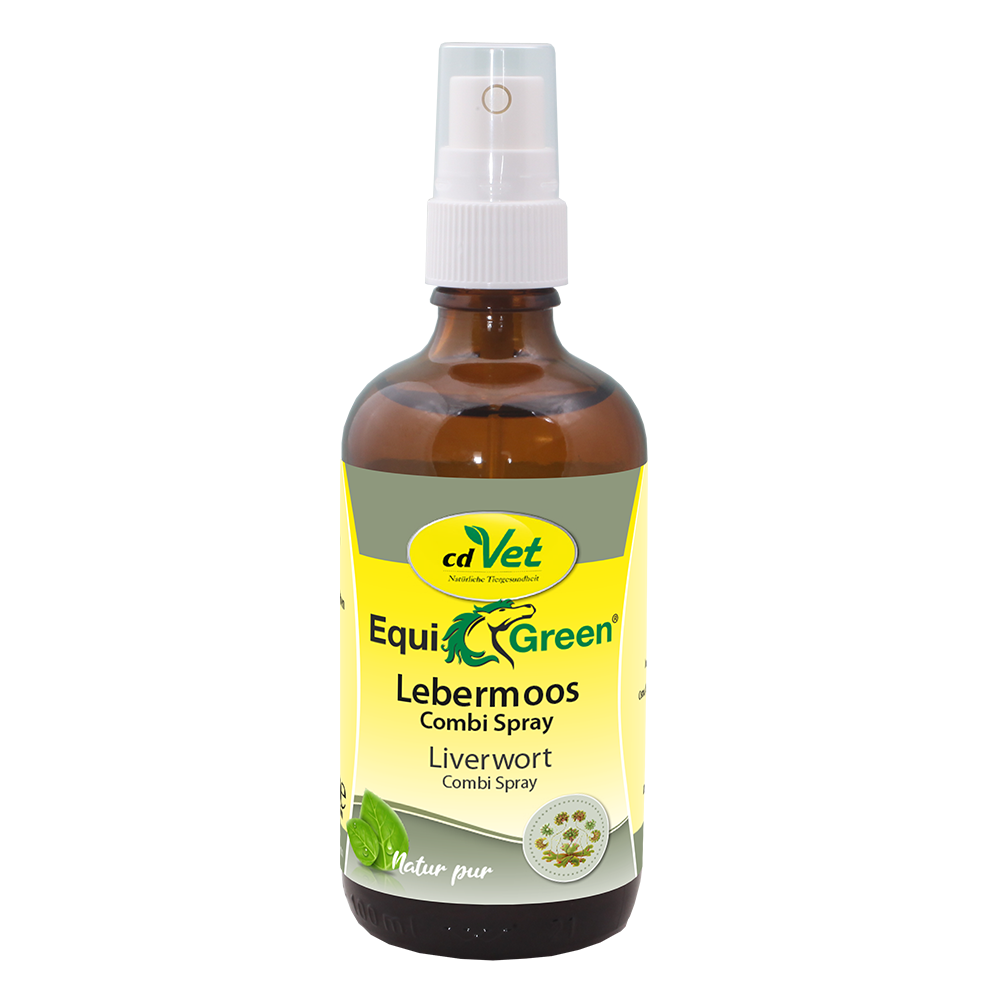
EquiGreen Liverwort Combi Spray 100 ml
Care product for horsesIn case of a reduced, skin‘s own protection against fungiEquiGreen Liverwort Combi Spray is a natural fur and skin care product made from liverwort, rockrose, and nourishing oils that support the natural regeneration of stressed skin. The skin is strengthened in its self-regulation by the milieu-improving ingredients. Colonization of pathogenic microorganisms and fungi on the skin is made more difficult. Soothing ingredients reduce itching and redness of the skin. The skin can again fulfill its protective function as a border organ to the outside world.As further measures we recommend:Disinfection of cleaning and saddle equipment (cdDes)Washing and disinfecting saddlecloths, sweat blankets, and winter blanketsDisinfection of the ambiance (horse stable, feeding troughs, …) (cdDes)Avoid contact with infected horses (quarantine/separation)Light, air, and sun are natural enemies of the skin fungus - ensure sufficient stay on the paddock and ventilation of the stable alley!Expert tip: It is conspicuous in horses, that are sensitive to fungi, that malanders, mite infestation, fecal water or even respiratory tract infections often `accompany´ the fungal infestation. Since it comes mostly during the time of changing the coat to the increased susceptibility to a fungal colonization, special attention should be paid to feeding and optimal micronutrient supply (HuminoMineral). If the need is not met, skin regeneration, skin stability, and new skin formation are disturbed, and the scin becomes susceptible to parasites. A micronutrient supply adapted to the need and the support with omega-3 fatty acids (EquiGreen Feeding Oil) from high-quality oils are significant for a fast regeneration.Since an external skin fungus often gives an indication of an infestation with intestinal fungi, an intestinal remediation with simultaneous support of the metabolic organs (liver and kidneys) can make very much sense (https://cdvet.sharepoint.com/:b:/s/shares/EWGT7LwNXVdFnI03Z_ORGEcBhsf_N440Hs3ApsFK4R79ug?e=8pocRT).Composition: aqua, liverwort, rockrose extract, savory extract, emulsifier, organic black cumin oil, marigold oil, lavender oil.Recommendations for use: spray affected skin areas at least 2 x daily.Contains lavender oil. May produce an allergic reaction.
Content: 0.1 Liter (€179.50 / 1 Liter)
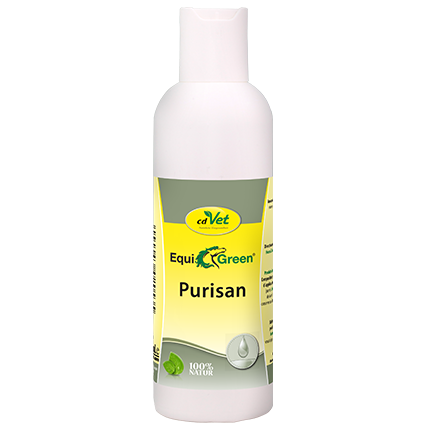
EquiGreen Purisan 200ml
Care product for horsesSoothing care milk for mane comb and tail rootEquiGreen Purisan is a natural special care for the mane and tail area. It is particularly suitable for horses with allergy-prone skin. EquiGreen Purisan relaxes and soothes the skin and helps to cleanse the fur of plagues and pathogens.Composition: aqua, essential oils (Calendula oil, Peppermint oil).Instructions for use: it is recommended to wash tail and mane with a suitable shampoo (e.g., EquiGreen HorseCleaner) before using for the first time, then apply EquiGreen Purisan onto the skin of mane comb and tail root and gently massage in. Repeat daily if necessary.Do not apply EquiGreen Purisan directly onto open skin areas!It can last about 5 months after opening. Store in a cool and dark place!
Content: 0.2 Liter (€129.75 / 1 Liter)
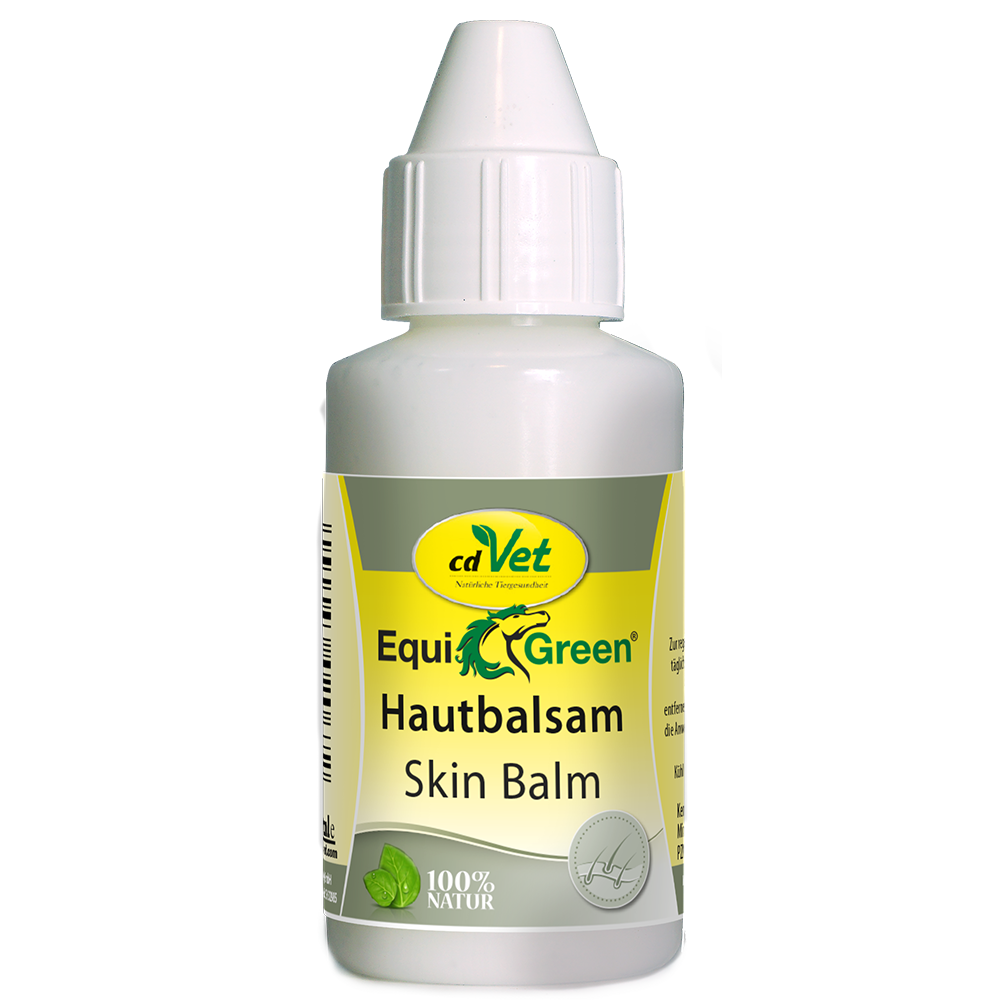
EquiGreen Skin Balm 100ml
Care product for horsesFor brittle, cracked skin - especially for care in the fetlock area.Composition: aqua, almond oil, St. John´s wort oil, extract of calendula.Recommendations for use: For the regular care of vulnerable skin areas, apply and deeply massaged into the skin daily over a large area 1-2 times, unincorporated balm remove with a clean cloth. With progressive improvment on the skin appearance are reduce the application 1-2 times per week. Do not apply to wound or of moist skin! Store in cool and dark places! Durable for about 3 months after opening.
Content: 0.1 Liter (€209.50 / 1 Liter)
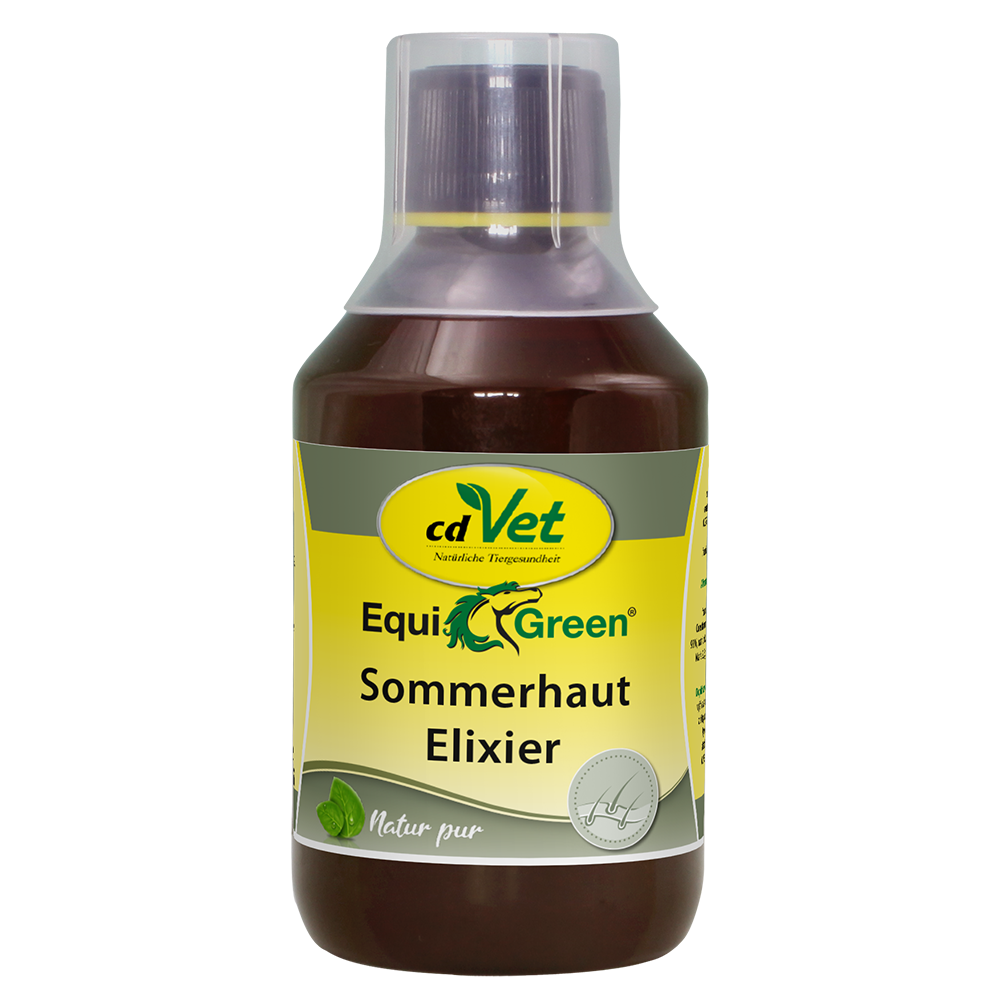
EquiGreen Summer Skin Elixir 250 ml
Complementary feed for horsesFeeding-related support of skin metabolism, liquidA well-functioning skin metabolism, accompanied by healthy skin and a shiny coat, is also influenced by feeding in horses and ponies. A high-protein feeding as well as feeding of synthetic vitamins, minerals, trace elements, and preservatives in horse feed can put a strain on the overall metabolism. An overload of the detoxification organs, liver and kidneys, usually shows up in a dull coat, dandruff and eschar formation, hair loss, and itching, as the skin metabolism as the ‘last excretory organ‘ in the body is also stressed.Common causes of unbalanced skin metabolism are incorrect feeding, obesity, and metabolic diseases. EquiGreen Summer Skin Elixir is specially aimed at the aromatic needs of horses and ponies in this context.Expert tip: As a supplementary, year-round supply of mineral and humic substances, EquiGreen HuminoMineral is recommended. During the grazing season, EquiGreen ToxiVet sorb should be fed additionally.Composition: stinging nettle extract, birch extract, wild pansy extract, marigold extract, mountain arnica extract.Zusatzstoffe je L: Konservierungsmittel: Milchsäure E270 47.5 g. Sensorische Zusatzstoffe: Ginkgotinktur 70.9 g, Mariendisteltinktur 23.6 g, Goldrutentinktur 23.6 g.Analytical constituents: crude protein 0.3%, crude fiber 0.5%, crude ash 0.4%, crude fat 0.2%, moisture 93%, sodium 0.02%.Feeding recommendation: Shake before use. If required, mix 1-2 ml/100 kg body weight 2 x daily with the feed or give it directly into the mouth. For year-round demand 1 x daily 0.5-1 ml/100 kg body weight.
Content: 0.25 Liter (€215.80 / 1 Liter)
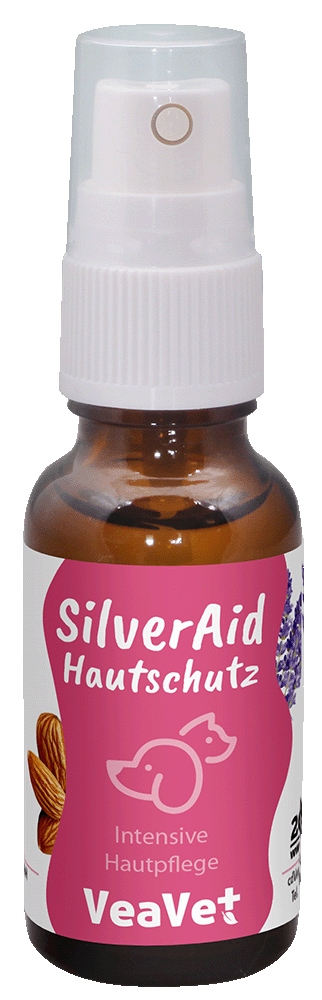
SilverAid Skin Protection 20ml
Care product for animalsNatural care product with ionizing silver for intensive skin careSilverAid Skin Protection - micronized silver for a natural skin, hoof and coat care of your four-legged animal.Micronized silver is a novel care product suitable for all species of animals. It can be applied directly to coat, skin and hoof and is easy to use. SilverAid skin protection is characterized especially by its positive skin compatibility. These are specially prepared silver particles, which are combined with high-quality, cold-pressed oils.The micronized silver particles have a size of 0.01 millimeters and do not enter the organism of the animal like the nanoparticles*. The superficial effect of the silver particles is, however, completely sufficient to provide the skin with a long-term protection without burdening the organism and our environment!This long-term protection can be granted because the micronized silver, due to its special spongy surface, has the possibility to generate new silver ions throughout the day. There is a constant renewal of the protection function.The nourishing oils supplement this protective function by giving the skin new moisture and thus ensuring an optimal well-being of the animal.- SilverAid Skin Protection is suitable for all animal species- It is free of nanoparticles- Particularly suitable for irritated skin areas- Positive influence on the whole skin flora- A settlement of negative bacteria can be made more difficult because the foodstuff is removed- Unpleasant fur and skin odors can be reduced* Nano silver can be harmful to many cell types in the body. It can negatively affect all organisms in our ecosystem.Composition:Aqua, emulsifier, almond oil, jojoba oil, vegetable glycerin, calendula oil, lavender oil, Sclerotium gum, micronised silver, sage oil.How to use: Spray thinly and evenly on the skin areas to be treatedShake before use!
Content: 0.02 Liter (€547.50 / 1 Liter)
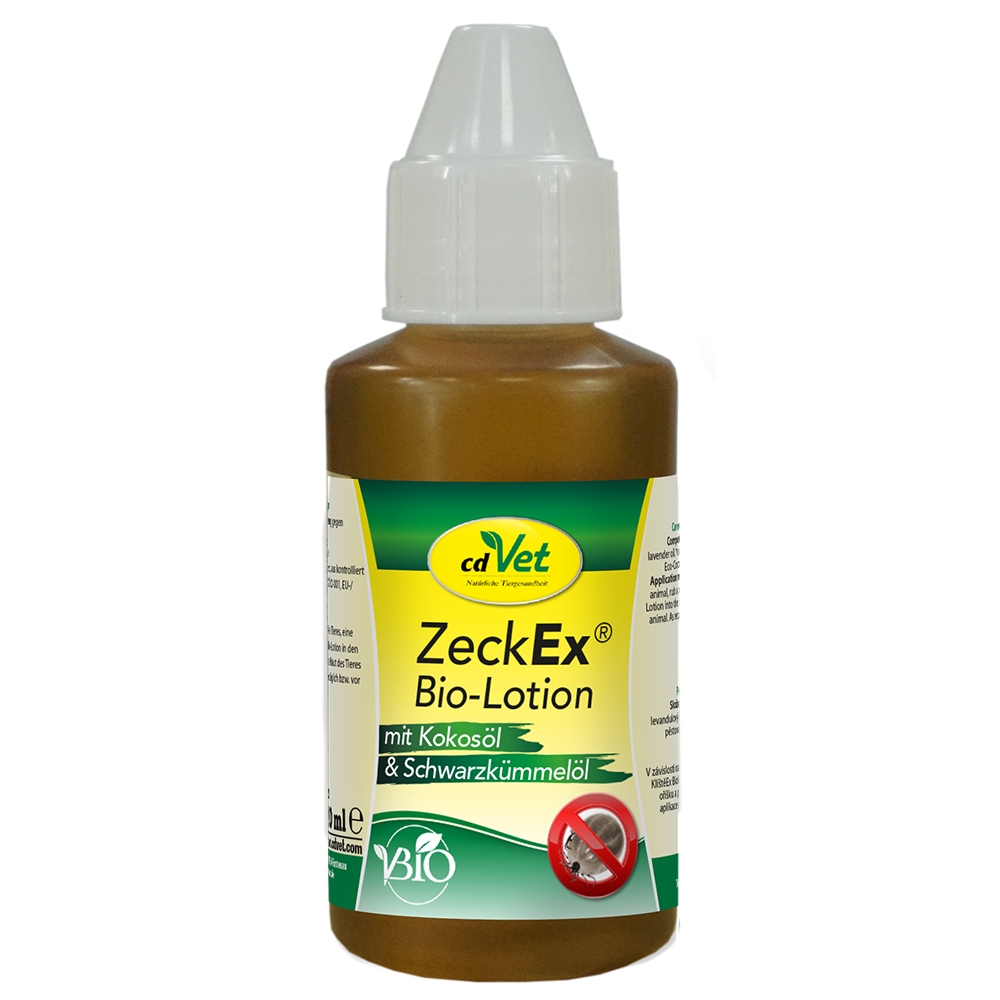
TickEx Organic Lotion 100 ml
Care product for dogs, horses, and rodentsScented oil for skin care and odor masking against ticksTickEx Organic Lotion is a skin-caring fragrance oil based on cold-pressed, Egyptian organic black cumin oil and organic coconut oil, which masks the animal‘s own odor. The animal is no longer perceived by ticks as an attractive host worth infesting.masking properties against ticksmasks the animal‘s own odorpure plant product - 100% naturalalso suitable for young animalseasy application, ready to useComposition: coconut oil*, Egyptian black cumin oil*,.lavender oil. *cold pressed, from controlled organic cultivation.How to use: Depending on the size of the animal, rub a pea- to hazelnut-sized amount of TickEx Organic Lotion into the hands and then spread over the coat/skin of the animal. As required, 1-2 applications daily or before each walk.
Content: 0.1 Liter (€169.50 / 1 Liter)
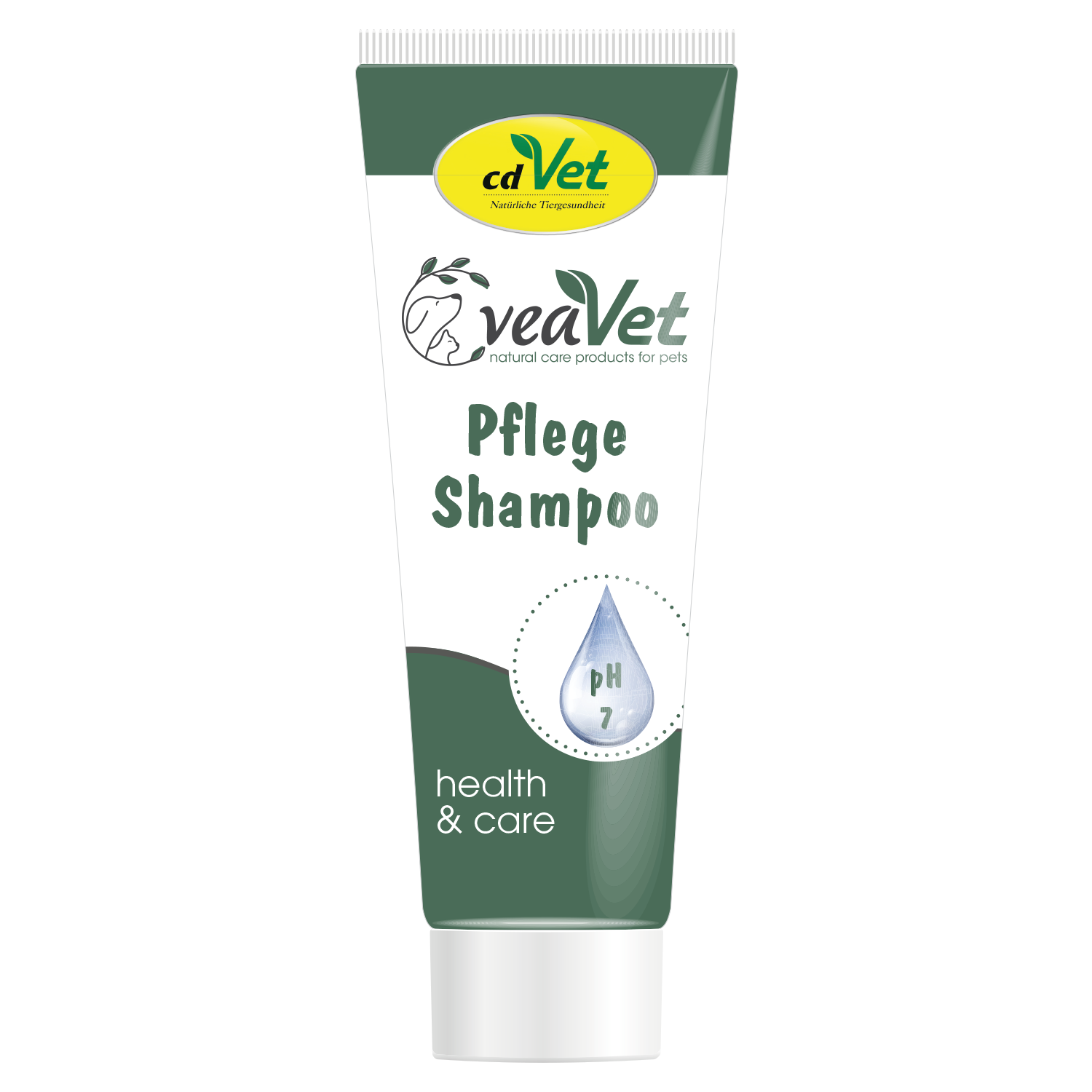
VeaVet Nourishing Shampoo 25 ml
Care product for animalspH value specially adapted to the particular needs of the hideveaVet Nourishing Shampoo shampoo is a shampoo suitable for the special care of the coat. It gives the coat fullness and shine, improves the hair structure and promotes elasticity and combability of the coat. It nourishes the skin in a natural way and also helps to soothe the skin due to its moisturizing effect and pH value adapted to the animal‘s skin.improves hair structure and shinepromotes elasticity and combability of the hairsoothes the skinmoisturizingpH-value 7concentrate, very yielding (dilution 1:5)100% biodegradablealso suitable for catsComposition: Aqua, Cocamidopropyl Betaine, Lauryl Glucoside, Methylpropanediol, Coco-Glucoside, Carprylyl Glycol, Citrus Grandis Peel Oil, Cymbopogon Winterianus Herb Oil, Geraniol, Phenylpropanol, Sodium Hydroxide.Application recommendation: before use, dilute 1 part shampoo with 5 parts water. Massage into the wet coat, then rinse well.Also suitable for cats.Avoid eye contact!
Content: 0.025 Liter (€238.00 / 1 Liter)
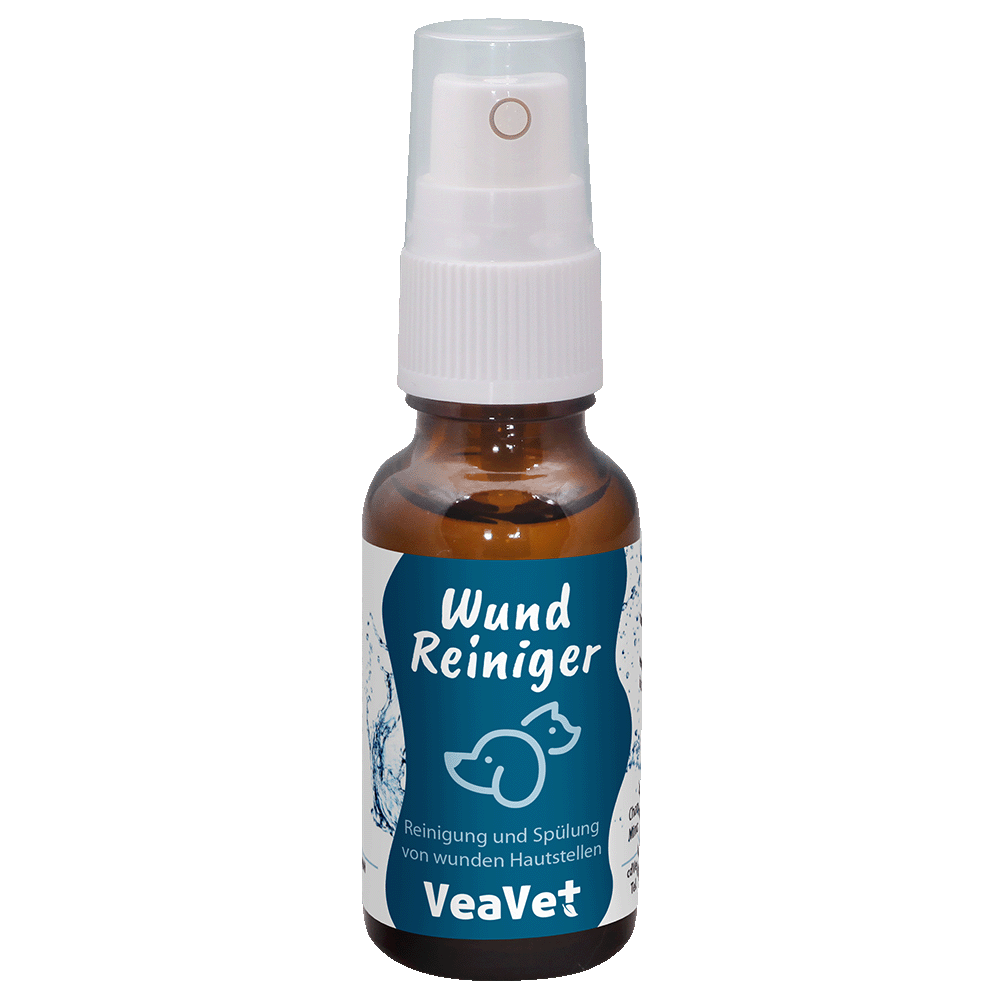
VeaVet Wound Cleaner 20 ml with spray head
Care product for animalsFor cleaning and rinsing of sore skin areasVeaVet Wound Cleaner is a care product without petrochemical ingredients, surfactants, colorants, fragrances, and preservatives, and is free of fat and oil. In a special electrolysis process, a highly effective care and hygiene product is produced by using salt, water, and electricity. After its effect, the agent decomposes back into its original ingredients, water and salt.The specially electrolytically treated water according to the cdDes® process ensures that no germs can be spread in the wound area during cleaning. VeaVet Wound Cleaner is therefore particularly suitable for cleaning in the wound area where there is a high potential for soiling and contamination. After cleaning with VeaVet Wound Cleaner, any treatment can be started flexibly.· for the care and cleaning in the genital and teat area to reduce biological burdens· dermatologically tested· no by-product formation and residues, but disintegration into its natural source materials (water and salt) after the cleaning process · ready-to-use application solution, extremely flexible application for both rinsing and sprayingComposition: sodium-containing, electrolytical-energetically treated waterApplication recommendation: Spray or rinse affected areas several times a day as required.Store it cool and dark!
Content: 0.02 Liter (€245.00 / 1 Liter)
Horses' ears can be affected by various diseases, including otitis externa (inflammation of the outer ear), otitis media (inflammation of the middle ear), otitis interna (inflammation of the inner ear), parasites, tumors and injuries. Signs such as head shaking, excessive scratching or unusual behavior should indicate a possible disease.
To combat dry skin in horses, you can promote skin health through a balanced diet with omega-3 fatty acids, sufficient drinking water and high-quality roughage. The use of special horse creams or lotions, regular coat care and checking for parasites such as lice are also helpful measures.
During the molting, it is advisable to give your horse high-quality roughage for sufficient crude fiber, a balanced mineral feed for vitamins and minerals, and protein-rich feed to support the coat change. Fatty additives such as linseed oil can promote skin and coat health. Good hydration through sufficient drinking water is also important to facilitate the molting. In addition, skin metabolism is promoted by the important nutrients in our 'EquiGreen Coat and Skin Vital'.
The horse's ears do not need to be cleaned regularly, but it may be necessary if there are signs of dirt, excess ear wax or irritation. A visual inspection during general grooming is advisable. If the horse is shaking its ears more, tilting its head or showing signs of discomfort, cleaning may be necessary. However, it is important to do this with caution.
"Hunger hair" is a colloquial term that refers to the long, coarse hairs on the withers and other parts of a horse's body. These hairs are often longer and thicker than the rest of the horse's coat and can be particularly noticeable in winter. The term refers to the idea that these hairs grow more when a horse is underweight due to lack of food or inadequate nutrition. In reality, however, these hairs can also be genetic or due to other factors such as hormonal changes.
Horses can be affected by various skin diseases such as mud fever, eczema, mange, fungal infections, sweet itch, coat change problems and urticaria.
To improve dull coat in horses, a balanced diet with the necessary nutrients is crucial. Regular coat care by brushing promotes blood circulation and removes dead hair. Additional measures such as sufficient hydration and, if necessary, special nutritional supplements can help. Our 'EquiGreen Coat & Skin Vital' contains plenty of B vitamins, which ensure that they support healthy skin metabolism.